The US dollar index has fallen for a second straight day as markets digest the midterm election results. EUR/USD is also testing resistance near 1.1260 for the second day in a row (the upper Bollinger Band on the daily chart). Buyers tried to breach that barrier yesterday (the intraday high hit 1.1274), but the session closed near 1.1228.
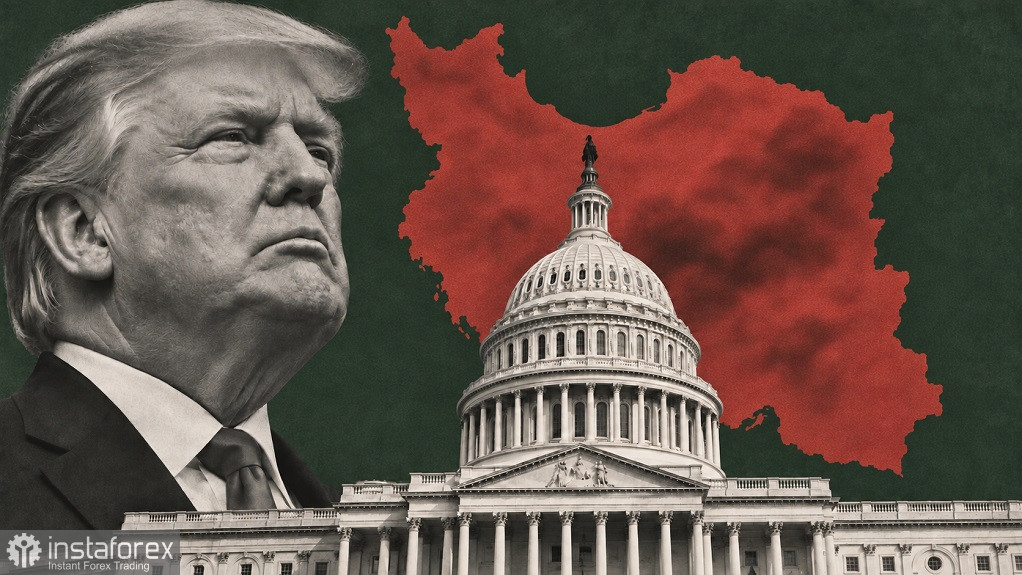
Traders are reacting not only to the Republican defeat in the midterms but also to the first post-victory statements from Democratic leaders. The most market-moving of those remarks concern the delicate "Iran case." Yesterday, Senate Democratic leader Chuck Schumer pledged to end the war with Iran and noted that some Republicans share that view. "The American people don't know what the heck we're fighting for in Iran," Schumer said.
It's worth remembering that splits over Iran existed among Republicans even before the midterms. In late September, four Republican senators (Susan Collins, Rand Paul, Thom Tillis, and Lisa Murkowski) joined Democrats in backing a resolution to halt military action against Iran absent congressional authorization — a measure that ultimately failed to secure the required votes in the Senate.
Now the political map has shifted. Democrats control both chambers, which gives opponents of continued military action additional leverage over the White House. Those prospects have weighed on the dollar: the likelihood of an end to the Iran war reduces geopolitical risk premia and lowers demand for safe-haven assets, including the dollar. It also eases energy risks that have recently supported US inflation expectations. Oil futures continue to retreat after yesterday's big drop: Brent is trading in the $93–95/bbl range and WTI near $86–87; both benchmarks fell by more than 8% in the previous session to the lowest levels since August 31.
In short, markets reacted strongly to the Democratic victory and the party's early, high-profile statements.
But here's the key question: can Congress actually stop a war in the Middle East, or are these statements largely rhetorical?
The answer is not straightforward. On the one hand, the president is commander?in?chief and can order military operations. On the other hand, presidential powers are not unlimited: the Constitution grants Congress the authority to declare war and to control military funding. US law also restricts the duration of certain military actions conducted without explicit congressional approval. In practice, however, enforcing those constraints has been a matter of the long-running dispute between the White House and Congress.
Theoretically, Democrats could pass a law forcing the Trump administration to end military operations against Iran. But there is one big "but": the presidential veto. Overriding a veto requires a two-thirds majority in both chambers — a threshold Democrats do not have. So, without significant Republican support, they cannot enact such a law.
In short, even with control of both chambers, Democrats cannot unilaterally force Trump to end the war.
There are other parliamentary levers on paper — nonbinding resolutions, for example — but their legal force in compelling an end to hostilities is doubtful. Since the Supreme Court's INS v. Chadha decision, the idea of circumventing a presidential veto with procedural maneuvers has been legally questionable. So, expecting Democrats to stop the war with a single resolution is unrealistic.
A far more effective lever is the budget. Congress can refuse to appropriate additional funds for the operation or legislate restrictions on financing specific activities. The president cannot simply spend money if Congress refuses to appropriate it: a veto can block a law, but it does not permit the executive to unilaterally allocate funds.
Even here, there are complications. First, money already appropriated is still available, so the administration could sustain operations for some time using existing resources. Second, attempts to restrict funding could trigger a protracted showdown between Congress and the White House that drags into other parts of the federal budget. So, a rapid end to the war via budgetary pressure is unlikely.
That said, the war could still end without a legislative compulsion, by a decision inside the White House itself.
The Wall Street Journal reports that the election outcome intensified internal debate over Iran policy. Some officials advocate escalating strikes to negotiate from a stronger position; others argue for stopping the campaign. According to WSJ sources, Defense Secretary Pete Hegseth favors continuing operations, while Vice President JD Vance and Secretary of State Marco Rubio lean toward a diplomatic settlement. Notably, Vance publicly linked Republican losses to the war's political fallout.
For the dollar, that internal split matters more than yet another symbolic congressional resolution. It shows the question of ending the campaign is being debated at the center of power — the White House — where decisive policy choices are made. Which side will prevail is still unclear. Clearly, continuing the war is becoming more politically costly for Trump, but that does not mean he is prepared to end it on any terms. Indeed, the election defeat could even push him toward new strikes to demonstrate strength and regain initiative.
Therefore, the Middle East situation will heavily influence market sentiment and demand for the dollar. If Trump resumes large-scale strikes on Iranian territory to force a deal on US terms, the dollar would likely find support from a rise in safe-haven demand and higher oil prices. If de-escalation wins out, with the president persuaded to compromise, the dollar would come under additional downward pressure, including versus the euro.
For now, EUR/USD buyers are effectively pricing in hopes of a near-term end to the conflict. However, expectations alone will not sustain a durable uptrend — not surprisingly, the pair has failed for two straight days to overcome the resistance level of 1.1260. A sustainable move higher requires concrete White House actions that confirm a willingness to de-escalate. Today, the question of ending the war remains open — and with it, the question of the euro's next directional move.