

MobileTrader
MobileTrader: platform dagangan di hujung jari!
Muat turun dan mulakan sekarang!

 23.09.2026 11:56 AM
The euro is plunging rapidly under a double blow of political instability in Germany and a deepening sovereign?debt crisis in France, while the Japanese yen keeps weakening due to the huge ongoing interest?rate gap with the Federal Reserve.
Against that stark backdrop, the tech sector shows its own dramatic dynamics: Apple, under new leadership, is storming toward a historic $5 trillion market cap after announcing its first foldable device. At the same time, the era of "premium" AI is ending, forcing Microsoft, Amazon and other tech giants to unleash aggressive price wars to push their neural networks into mass adoption.
This review of four key developments shows how geopolitics, monetary policy and shifting corporate strategies are creating a new, highly volatile reality for investors right now.
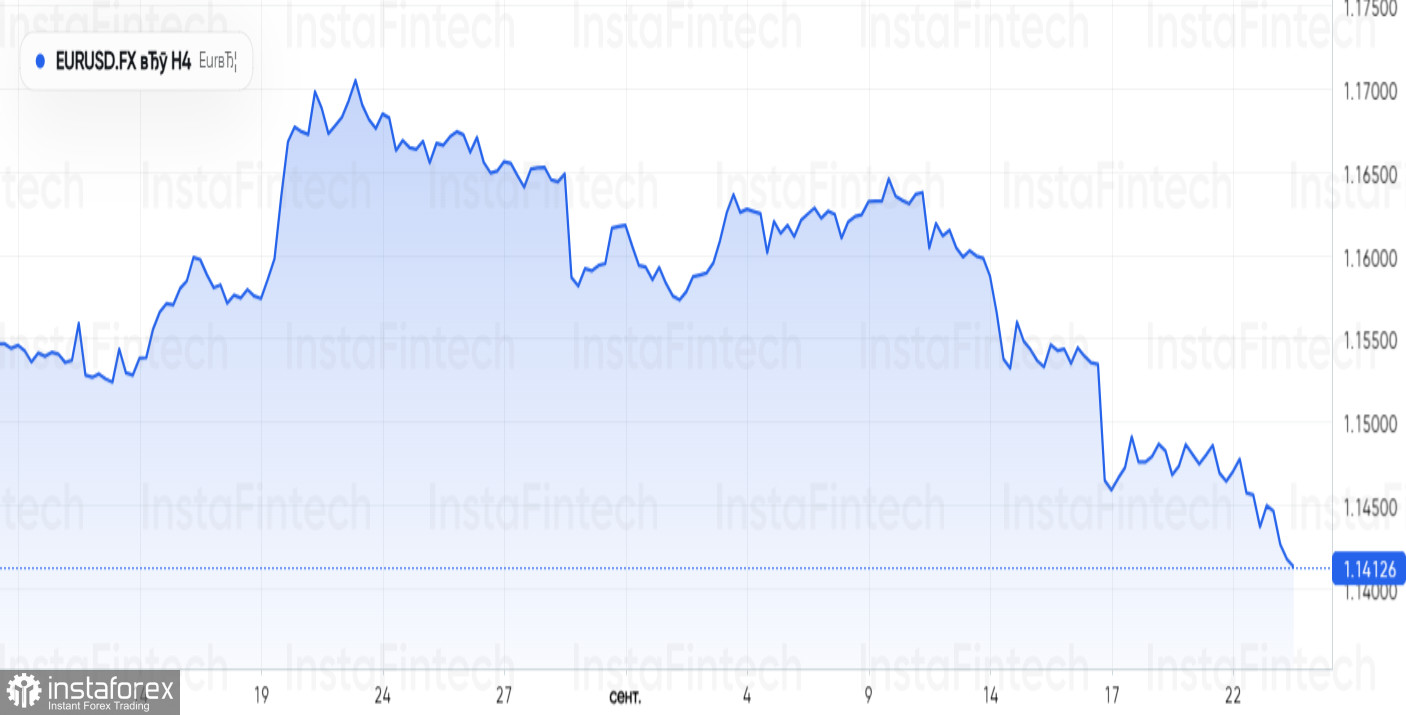
The euro continues its sharp fall, hitting seven?week lows and breaking the psychologically important 1.1450 per dollar level. EUR/USD collapsed below prior support at 1.1454. Notably, this rout occurred despite moderate global risk appetite and falling oil prices. Investors are worried not about commodities but about what is happening in the heart of Europe.
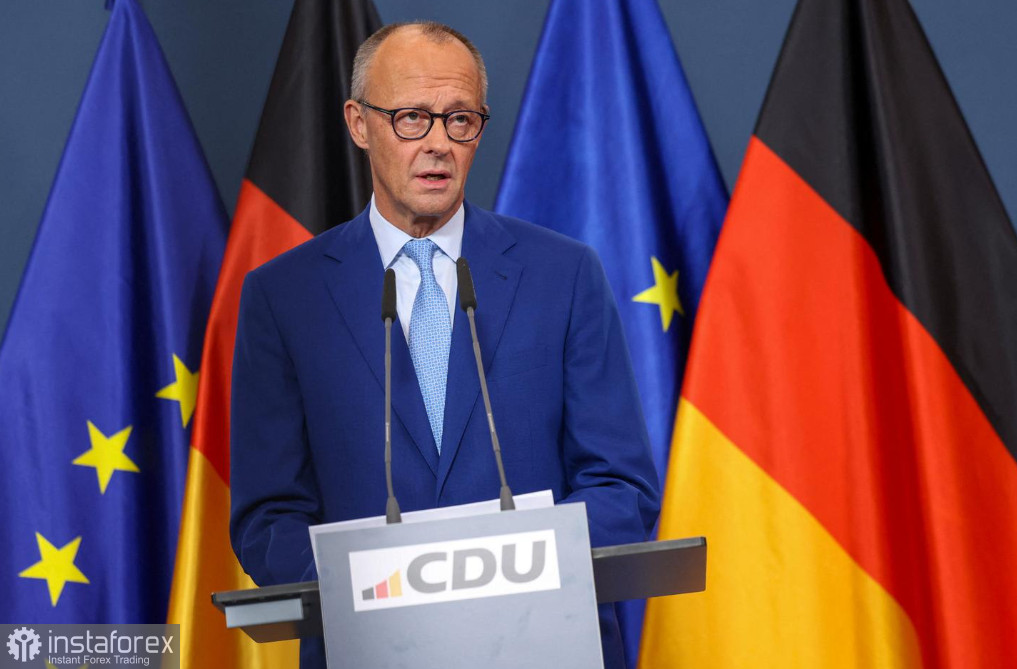
The immediate trigger for the sell-off was the outcome of Sunday's regional elections in Germany. What happened to Chancellor Friedrich Merz's Christian Democratic Union (CDU) has been described by The Economist as a "catastrophe." In Mecklenburg?Western Pomerania, the chancellor's party failed for the first time in postwar history to pass the 5% threshold and was effectively ousted from the regional parliament. In Berlin, the CDU even ceded first place to the Left Party, which took 25.7% of the vote.
Consequences were swift. NPR and CNBC report that Friedrich Merz cancelled a planned trip to the UN General Assembly in New York to focus on saving the reform agenda. But financial markets are already pricing in bleak scenarios. The future of a massive €2 trillion euro?area budget — much of it intended for increased defense spending — is now in doubt.
According to the Financial Times, European officials admit that the weekend results force the EU to radically revise its plans for the coming months. At the same time, the rising influence of the pro?Russian Alternative for Germany (AfD) only adds fuel to political uncertainty.
If Germany is hitting the euro with politics, France is doing it with macroeconomics. The budget problems of the eurozone's second?largest economy have reached an acute phase. On September 18, credit?rating agency Scope downgraded France's sovereign rating from AA? to A+, aligning more closely with Fitch and S&P. Morningstar DBRS also cut its outlook to negative, Bloomberg reports.
French finance ministry figures look grim: public debt is projected to reach 119.3% of GDP in 2026 and exceed the critical 121.7% of GDP in 2027.
High Forex volatility now opens trading opportunities both on downside moves and rebounds in European assets. Key instruments, including EUR/USD and other currency crosses, are available for trading on the InstaForex platform. Don't miss the chance to profit from the current geopolitical and macro shifts — open an account and download the mobile app to trade 24/7.

The Japanese yen continues to weaken — this is the third consecutive session of losses against the US dollar. The market has come to a clear conclusion: the Bank of Japan is not prepared to match the pace of monetary tightening set by other major central banks.
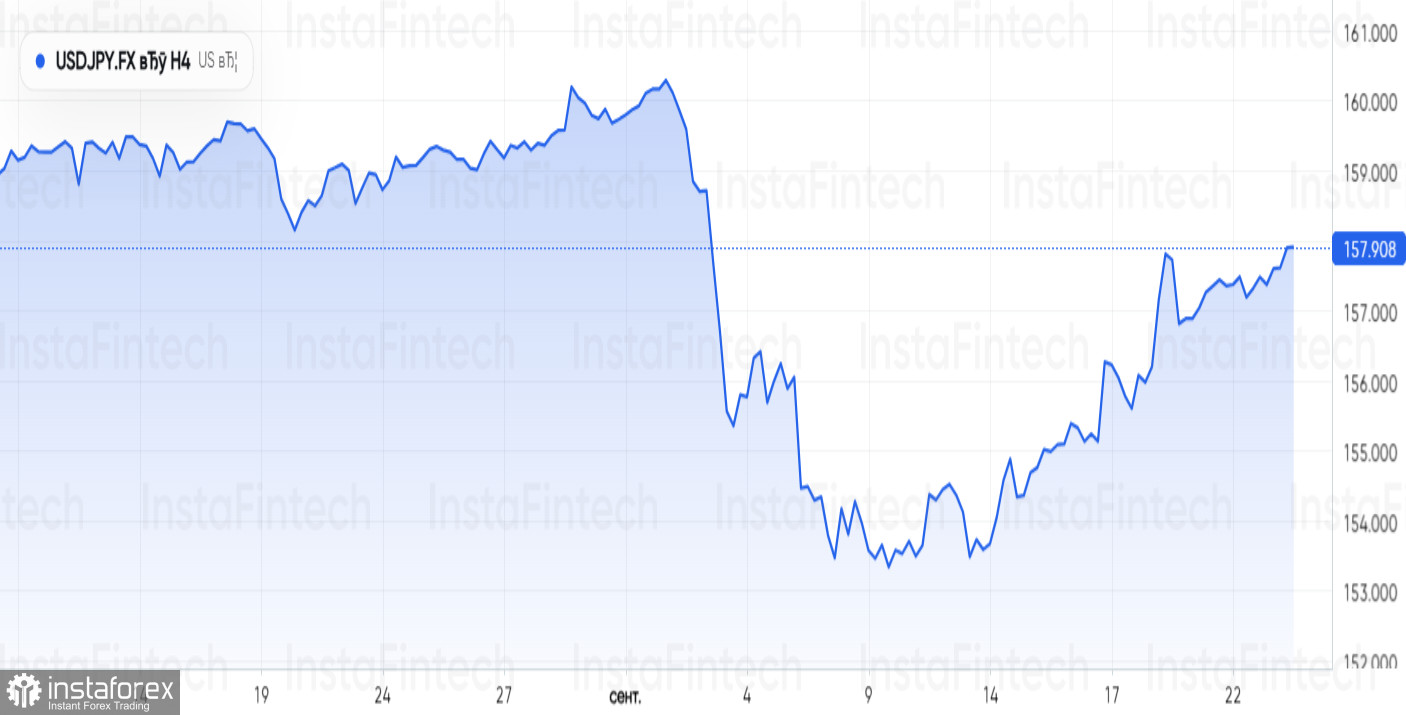
The enormous rate differential (about 275 basis points) keeps acting like a magnet for classic carry trades funded in yen. During the Asian session, the USD/JPY pair traded near 157.33. Some temporary respite came from a Japanese market holiday and rising fears of currency intervention.
Nikkei reported that last Friday Japanese officials requested USD/JPY quotes from banks — a request that in market parlance almost always signals that authorities are closely monitoring the situation and preparing the ground for a possible market intervention.
However, the fundamental pressure on the yen runs deeper and stems from the central banks' mixed decisions last week. Yes, the BOJ raised its short?term policy rate to 1.25%, but the hawkish effect of that decision was spoiled by dissent: two board members voted against the move in favor of keeping policy looser. That dissent instantly cooled investor enthusiasm: the market's implied probability of another rate hike in October plunged below 25%.
The Federal Reserve, by contrast, is acting with iron resolve. The Fed not only raised rates but adopted an explicitly hawkish tone. CME FedWatch shows roughly a 55% chance of a further 25?bp hike in October, which would push the federal funds rate into a 4.00%–4.25% range.
"If the Bank of Japan does not tighten faster than the Fed, the roughly 275?bp rate gap will continue to fuel yen carry trades," says Carlos Casanova, senior Asia economist at Union Bancaire Priv?e. He forecasts USD/JPY could reach 160 by year?end, with a correction to 156 by mid?2027.
The outlook is worsened by Economies.com's scenario: if the Fed raises before the BOJ responds, the gap could widen to 300 bps in October, exerting even greater pressure on the already weakening yen.

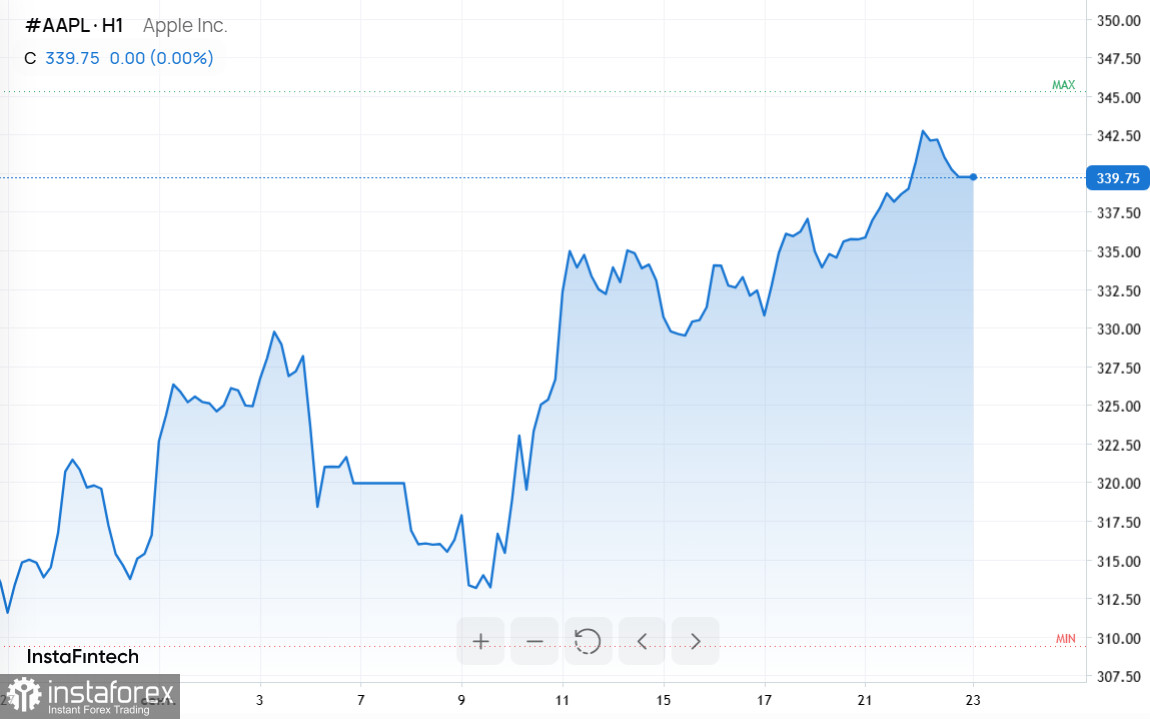
A true "Apple" triumph erupted on trading floors Tuesday morning. Apple shares surged to an intraday record of $345.34, briefly pushing the company past the psychological and historical $5 trillion market?cap threshold. Most impressive: it took the firm just three weeks to pull off this financial feat, and it happened amid a global change of era at the company's helm.
The previous intraday record ($344.57) was set in late July, when Apple first crossed the $5 trillion mark in its modern history. At that time, Apple became only the second company to reach that milestone, behind Nvidia, which hit it in October 2025.
But this latest surge has added drama. On September 1, Tim Cook's 15?year era ended, and John Ternus officially took the wheel as CEO. On Ternus's inauguration day, investors valued Apple at a "modest" $4.68 trillion (closing price $316.85).
One might have expected turbulence during a leadership transition, yet the market reacted in exactly the opposite way. In less than a month, the share price climbed steadily, gaining almost 9%.
What fueled this market march? Undoubtedly, the spectacular September 9 presentation. Ternus didn't hold back, unveiling not only the long?awaited iPhone 18 line but also fulfilling a years?long fan wish — Apple's first foldable device.
Wall Street responded quickly, though analysts remain pragmatically balanced between euphoria and caution. Early consumer demand signals are mixed but encouraging.
Evercore ISI analysts, buoyed by stronger?than?expected interest in the iPhone 18 Pro and Pro Max, raised their price target to $380. UBS remains Neutral for now but also notes a positive trend: wait times for new Pro models are significantly shorter than last year's, suggesting healthy — not purely speculative — demand.
Just a year ago tech firms tried to monetize every AI whim with sky?high prices, hoping hype would do the rest. Times have changed. Microsoft appears to have been first to publicly recognize the new market reality: the company is now offering discounts of 30%–50% on subscriptions to its AI assistant Copilot, The Information reported Tuesday.
The trigger for this generous move was the launch of a unified "super?app" that will combine Microsoft's consumer and enterprise neural networks into one ecosystem. But let's be honest: it's not just a gift to users — it's a forced strategic pivot. Competition from independent AI labs like OpenAI and Anthropic is snowballing. To retain customers, Microsoft is moving from price greed to pricing flexibility.
Microsoft's shift is just the tip of the iceberg. The whole IT sector is in turmoil, and discounts have become the new normal. If yesterday access to AI agents came at a premium, today companies are fighting to retain users.
Amazon, for example, is attracting customers with 90?day free trials of its AI assistant. Adobe opened free access to its Firefly image generator, and Workday is giving AI features to key users at no charge. Free credits, long trials and personalized discounts have become the primary tools in the fight to keep customers from switching to cheaper alternatives.
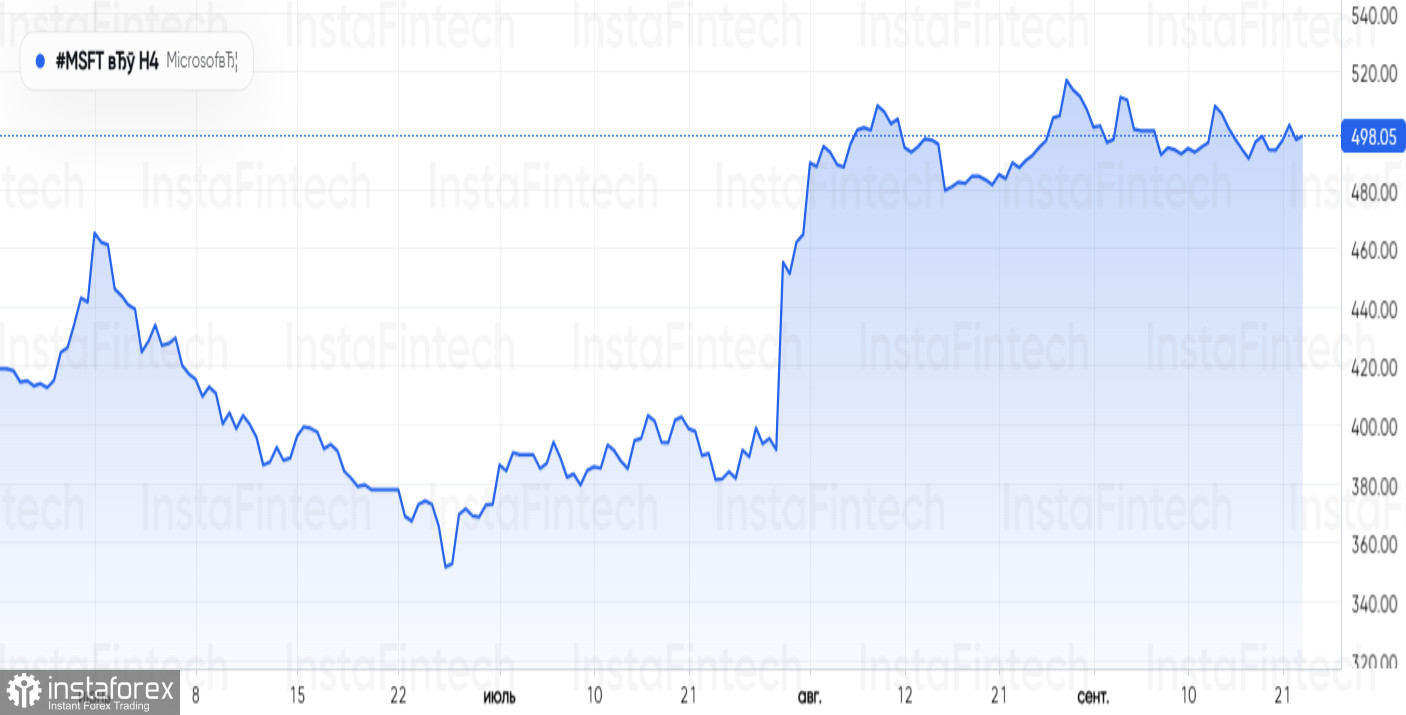
The numbers back this strategy. An enterprise subscription to Microsoft 365 Copilot costs $30 per user per month. The service has exceeded 30 million paid seats, which at list prices translates to roughly $10.8 billion of annual revenue.
But there's a significant caveat. Of more than 400 million commercial Microsoft 365 users, only a small fraction agreed to pay for the AI add?on. It became clear: for AI to go truly mainstream, its price must be more attractive. Discounts are the surest route to winning the corporate customer's heart — and wallet.
These tectonic strategic shifts among IT giants directly impact their share prices. Investors and traders are watching carefully to see how AI price wars will affect margins and future profits.
The stocks discussed here (including Microsoft, Amazon, and Adobe) are available for trading on the InstaForex platform. Want to profit from AI and IT sector trends in real time? Open an account on InstaForex today and download the mobile app. Trade global tech stocks with one click, wherever you are.
MobileTrader: platform dagangan di hujung jari!
Muat turun dan mulakan sekarang!
Anda telah pun menyukai siaran hari ini
* Analisis pasaran yang disiarkan di sini adalah bertujuan untuk meningkatkan kesedaran anda, tetapi tidak untuk memberi arahan untuk membuat perdagangan.
 E-mel untuk penulis kandungan analitik teks dan video: [email protected]


