



Explore the latest trends in the futures, stock, and equity markets. Read price forecasts for cocoa and cocoa beans and learn how futures influence commodity prices and listed companies. We examine the outlook for the cocoa‑bean exchange in 2025.
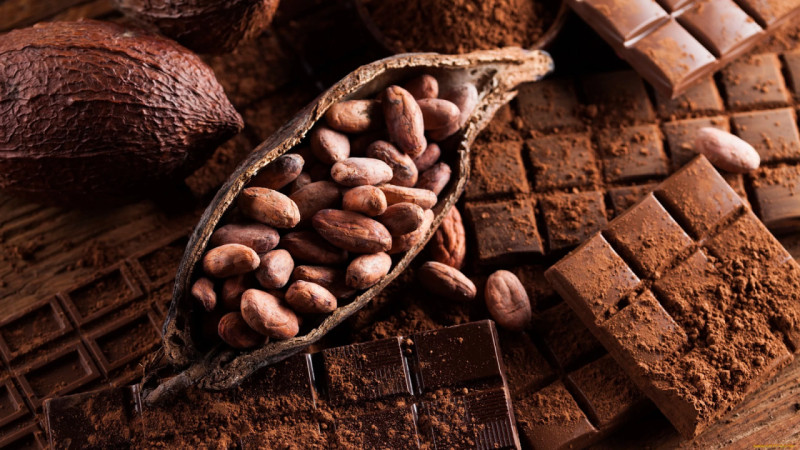
In 2024, the cocoa market effectively "exploded." Prices jumped to $12,000 per tonne. No one expected this — not even seasoned market participants. The annual rise exceeded 300%. Cocoa became one of the best-performing exchange assets, outpacing even oil and Bitcoin.
What caused this surge?
- Droughts in Ghana and Côte d’Ivoire.
- Tree diseases and falling yields.
- Logistics and export disruptions.
- Increased interest from speculators.
Against this backdrop, ICE Futures US reported critically low stocks - the lowest in 21 years. The market fell into deficit, and the effect showed up immediately in price dynamics.
And what about futures?
Futures are the primary trading instrument for cocoa. They became the arena for the real price battle in 2024. When supply is tight and demand is strong, commodity futures become the focal point of market action. That is where the speculative wave played out.
Everything that happens for cocoa in the futures market has a direct impact on:
- retail prices (chocolate, confectionery),
- corporate revenues (Nestlé, Lindt, Mondelez),
- the futures market
Cocoa is no longer just about chocolate.
More investors now view cocoa as a high‑volatility asset. It has entered large portfolios alongside gold, grains, and even oil. Participants now include not only hedgers and traders but also investors seeking speculative gains.
In 2025, the market cooled somewhat, but it remained unstable. Prices have not returned to prior levels. Thus, the following questions persist:
- What are the price forecasts for cocoa?
- Can the market recover?
- Or will volatility become the new normal?
Answers could be found in our article. For now, note that cocoa is no longer just a chocolate story. It is part of a global game where the stakes are becoming higher.
Cocoa futures and how they work

Cocoa futures are an exchange instrument that allows market participants to lock in the price of cocoa in advance. A contract is written for future delivery, but actual delivery does not occur in most cases. More often, traders simply resell contracts, and that activity forms the core of the market.
A simple example: you buy a futures contract in January for delivery in July. If the price rises by summer, you resell the contract at a higher price and earn the difference. If the price falls, you lose. It is classical trading logic.
Who trades and where this happens
The main venues for cocoa trading are ICE Futures US and ICE Futures Europe. These exchanges list contracts, host trading, set prices, and concentrate primary market activity.
Market participants include:
- Farmers, who need to lock in revenue from a future harvest.
- Chocolate manufacturers, who hedge against rising input costs.
- Investment funds, which trade on speculative price moves.
- Retail traders, who seek a new volatile instrument after crypto.
Thus, the cocoa market has evolved beyond agriculture. It is a full‑fledged segment of commodity futures trading. Turnover runs into billions of dollars, and price dynamics influence global financial decisions.
Futures allow market participants to hedge against price shocks. If you are Nestlé and you need 1,000 tonnes of cocoa in six months, you buy futures now and remove the risk of a July price spike. If you are a trader, you attempt to capture volatility and profit from price swings.
This structure makes the cocoa market sensitive to any news — from droughts in Africa to central‑bank decisions. Incidentally, most price forecasts for cocoa rely on futures behavior. Futures set market expectations: they show how participants value the future price, how fund managers size their positions, and what positions speculative trades open.
What rocked cocoa market in 2024
The year 2024 was a storm for cocoa. What was once seen as a stable commodity suddenly became one of the scarcest resources on the exchange. Several factors converged and produced explosive price moves.
Factor 1: The weather hit the crop
The climate was the main blow. Droughts hit Ghana and Côte d’Ivoire, which produce more than half of the global cocoa. The rain stopped for weeks. Plantations suffered, and trees dropped pods. A CSSV virus outbreak further cut yields. According to the International Cocoa Organization, production fell by about 11%. The result was a market deficit and a price surge.
Factor 2: Production became more expensive
The cocoa industry was already complex. In 2024, it became costlier. Fertilizers rose in price. Fuel costs climbed. Logistics failed. Farmers and processors bore the additional burden. Growing, harvesting, and shipping beans required more cash. As a result, the market reacted to these factors.
Factor 3: Speculators entered the market
While some lost crops, others saw opportunity. ICE Futures US saw a sharp rise in trading volumes. Hedge funds and private traders entered aggressively — shorting, longing, and riding the waves. Volatility increased. In a context of shortage and rising demand, this activity intensified price moves. Futures trading took center stage, and cocoa became a headline agricultural asset.
What about stock market?
The cocoa story has begun to show up in public companies. Chocolate makers such as Nestlé and Mondelez have absorbed higher raw material costs. In some cases, they raised retail prices. In others, they squeezed margins. The impact showed up immediately in corporate results.
When those companies are included in indices, the effect passes through to the broader equity market via futures. In other words, cocoa volatility is now felt by investors who do not trade the commodity directly.
What happened in cocoa market in spring 2025
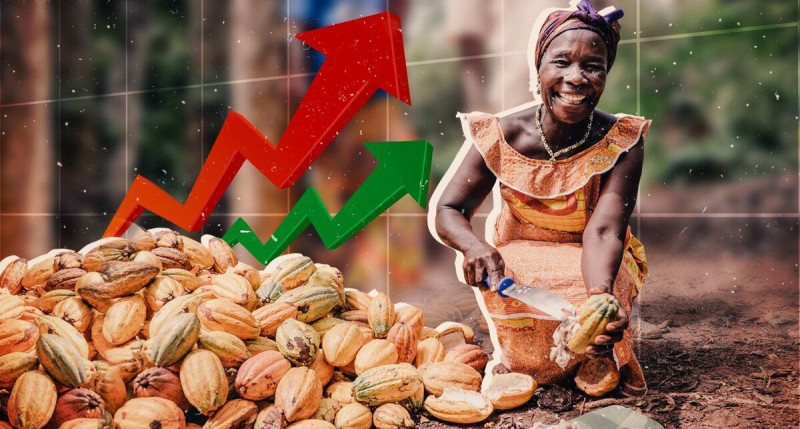
The start of 2025 did not bring relief. Peak prices eased, but the market remained elevated, and there were reasons for that.
Prices became lower
After December records near $12,000 per tonne, the market cooled somewhat. In April 2025, quotes traded around $8,000–$8,300. That is not the peak, but it remains very expensive compared to pre‑crisis levels of $2,500–$3,000.
The reason is that the deficit has not intensified, but it has not disappeared either.
On the exchange, activity is intense
Futures continue to trade with high activity. Participants monitor conditions on plantations day by day. Any news — on weather, exports, or strikes — moves the price immediately.
Commodity futures are among the most sensitive market segments right now, and cocoa remains firmly in the forefront.
At the same time, equity markets tied to futures also react, especially in indices that include food giants. Investors have already priced the "cocoa factor" into their models.
Harvests rose, but problems remain
Official data showed cocoa harvests in Côte d’Ivoire rose roughly 14% compared to last spring. That is a positive sign.
However, exchange stocks remain below normal. That is the real concern. ICE and ICCO reported cocoa inventories on exchanges at the lowest level in 21 years. Even if African shipments increased slightly, the market remains undersupplied.
Production remains at risk
Harvests in Côte d’Ivoire increased at the start of the year by about 14% versus 2024.
Production faces threats:
- soils are depleted;
- viral diseases persist;
- the climate is increasingly unpredictable.
While the agro‑meteorological forecasts are cautious, the market still faces the risk of another disruption.
What comes next: price forecasts for cocoa in coming months
The market has cooled a little, but uncertainty remains the main factor. That means forecasts are now taking shape. Everyone wants to know what will happen to cocoa next. Opinions diverge.
Scenario 1: Prices could surge again
Many analysts do not rule out another jump. The reasons are unchanged:
- inventories remain at minimum levels;
- demand does not fall;
- production remains under pressure from climate and economic factors.
If new supply disruptions occur or panic erupts during the dry season, cocoa could easily push back toward $10,000 per tonne. This is not emotion — it is a working scenario in most current analytical reviews and price forecasts for cocoa.
Scenario 2: Stabilization, but traders should not relax
A more positive view also exists. Some experts say the market overheated and may now move toward stabilization. If the weather in Africa holds and the harvest proves adequate, prices could trade in a range of $7,000–$8,000. That is still high, but it would ease the panic. In that case, commodity futures traders would shift to a wait‑and‑see mode. Volatility could fall, but sensitivity to news would remain.
Scenario 3: Prices may fall
The least likely, yet possible, outcome is a string of positive developments: strong harvests, reduced speculative activity, and improved logistics. Then cocoa could fall to $6,000–$6,500 per tonne. That outcome would be a welcome relief for processors and chocolate companies. Futures would unwind earlier gains, especially in the consumer‑goods sector, and the cocoa‑bean exchange would finally show normal inventory levels.
What determines the market’s fate?
Here are four factors that will shape the outlook:
- Weather: even one poor season in Ghana may change everything.
- Yield: cocoa trees are aging, and diseases continue to spread.
- Demand: China and India are increasing their consumption, which adds pressure.
- Regulation: new EU rules on sustainable imports may complicate life for farmers.
Table: Cocoa Market Scenarios for 2025
| Scenario | What should happen | Price forecast (per tonne) | Markets that will react |
| Growth | New shortage; poor weather | $9,000–$10,000 | Commodity futures, equities |
| Stabilization | Good harvest and no adverse news | $7,000–$8,000 | Cocoa‑bean exchange, funds |
| Price decline | Surplus and weak demand | $6,000–$6,500 | Futures‑linked equity market |
Where to look for opportunities: investing in cocoa and related assets
Cocoa has long ceased to be just an agricultural input for chocolate makers. Today, it is an instrument. It is volatile, risky, and full of potential. For investors, there are at least three ways to deal with it.
1. Futures: fast decisions, high risk
If you are an experienced investor comfortable with trading, consider commodity futures, including cocoa. This is a high‑volatility instrument: prices can spike quickly and just as quickly reverse.
Futures contracts trade on ICE Futures US and ICE Futures Europe. These venues concentrate the largest volumes, set the exchange price, and shape market expectations.
Be prepared: this trading requires attention to detail, quick decisions, and readiness to manage risk.
2. Stocks of producers and processors
If direct futures trading is not for you, consider a calmer option — shares of companies that work with cocoa.
Examples include Mondelez, Nestlé, Barry Callebaut, and Hershey, among other large players. Their business depends directly on raw materials, and their share prices often react to cocoa price forecasts.
The advantage of this approach is lower volatility. The drawback is that the correlation with exchange cocoa prices is not always direct.
3. ETFs and funds: a balanced portfolio option
If you prefer moderate risk, look at ETFs and index funds focused on agriculture. Many of them include cocoa as part of a commodities basket.
Examples:
- NIB (iPath Bloomberg Cocoa Subindex Total Return ETN)
- DBA (Invesco DB Agriculture Fund)
Keep in mind possible risks
Investing in cocoa is not only about opportunity. You should account for risks:
- Strong dependence on weather conditions.
- High volatility driven by speculative activity.
- Political instability in producing regions.
- Rapid trend reversals without a clear explanation.
Be especially cautious in the commodity futures segment. Decisions there occur instantly, and news can move the market within hours.
Key takeaways about cocoa market in 2025
In short, cocoa is still very much in play. The market eased after the December peak. But the situation remains unstable, and it is too early to relax. Now is not the time to turn on autopilot.
What do we see?
Quotes are no longer $12,000 per tonne, but they are also far from the old $2,500–$3,000 range. In spring 2025, the price sits around $8,000 per tonne, which remains high. That is especially painful for processors facing rising input costs.
Exchange inventories remain near historic lows. Inventories are the smallest in more than 20 years. Even if harvests improve, the market will stay tight. That means price spikes remain a real possibility.
Monitor the weather and the news.
Weather is the most important market indicator. One poor season in Ghana and the market can spike again.
Add political risks, export restrictions, and shortages. It becomes clear why cocoa commodity futures are so jittery.
That is why analysts update cocoa price forecasts so often. Too many variables. Market sentiment shifts too quickly.
Tips for market participants:
- Monitor the climate in West Africa.
- Watch ICCO reports and exchange inventories.
- Check demand data from China and India.
- Subscribe to cocoa price analysis and forecasts — do not trade the market blindly.
Remember that commodity futures move fast and require readiness for sharp reversals.


 Back to articles

