



In this article, you will learn how platinum and palladium futures are formed, today’s exchange prices, the main influencing factors and price‑movement forecasts for investors.
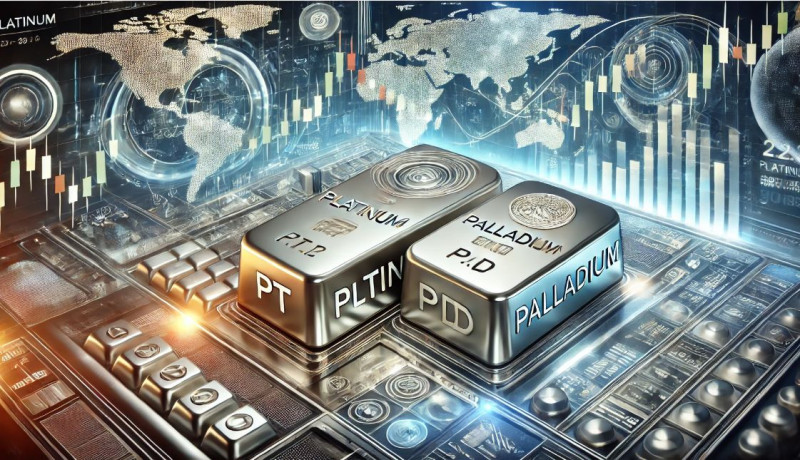
We examine the topic of investing in rare metals. Futures contracts on scarce metals with high industrial importance became one of the most talked‑about instruments in 2025. These assets, traded on the derivatives market, allow market participants to lock in a price today for delivery in the future. Their value lies in their unique roles in the manufacturing, energy and technology sectors. High volatility and sensitivity to global developments make these instruments not merely exchange contracts but barometers of global market sentiment.
The reason for heightened attention is geopolitics, supply‑chain instability and shifting technological priorities. Metals once perceived as peripheral in the noble‑metals complex are now at the center of a strategic race: they are used in exhaust‑gas purification, clean‑energy generation and promising solutions in transport and environmental technology. Tightened export controls, production limits, sanctions pressure and the move to greener energy sources all contribute to constrained supply amid rising demand.
The year 2025 was pivotal: renewed interest in commodities, waning confidence in traditional paper instruments and FX market volatility pushed investors toward assets with solid fundamentals. Demand for platinum futures has increased both from industrial giants and from investors seeking capital protection.
This piece aims to provide an objective, detailed assessment of the growth potential of these instruments and to outline the fundamental and technical risks that could depress their prices. The reader will get a complete picture: from the global context to local supply drivers, from speculative opportunities to hedging strategies in an unstable global economy.
Precious‑group metals: industrial and investment significance
Platinum‑group metals are among the key resources of the 21st century. Their properties — high melting points, chemical inertness and catalytic activity — make them indispensable in strategically important industries. The largest consumer remains the automotive sector. Catalytic converters installed in exhaust systems use these elements to neutralize toxic emissions.
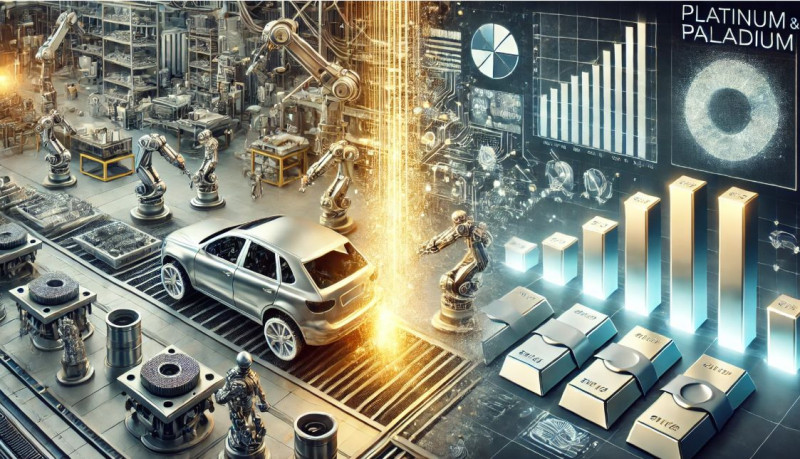
More than 70% of global consumption is attributable to this sector. Even with accelerated electrification of transport, demand persists: hybrid powertrains, heavy commercial vehicles and industrial machinery continue to rely on classical emission‑control technologies.
| Applications | Role | Trends and outlook |
| Automotive industry | Catalysts for gasoline and diesel engines; exhaust‑gas purification. | The transition to electric vehicles is a long phase and maintains high demand; growth in hybrids and heavy‑duty segments. |
| Jewelry | Use in premium jewelry due to oxidation resistance and attractive appearance; palladium prices on the exchange may rise. | Increased interest in Asia and the Middle East; rising consumption in developing markets. |
| Hydrogen energy | Catalysts in fuel cells and electrolyzers; a key role in the hydrogen economy. | Expansion of green infrastructure; state support and growing global demand. |
| Global supply | Main suppliers are South Africa and Russia — high geographic concentration. | Logistics risks, sanctions and political instability amplify speculative swings. |
| Financial markets | Used as a capital‑protection instrument; accessible via futures, ETFs and derivatives. | Low correlation with equities; sought after during periods of economic instability. |
For financial‑market participants, these metals have become tools to protect capital from inflation and equity‑market volatility. Low correlation with stocks, constrained supply and strong industrial and energy demand create unique conditions for inclusion in strategic portfolios. Through futures contracts, exchange‑traded funds and derivatives, stable interest is forming among both institutional and retail investors.
Growth drivers
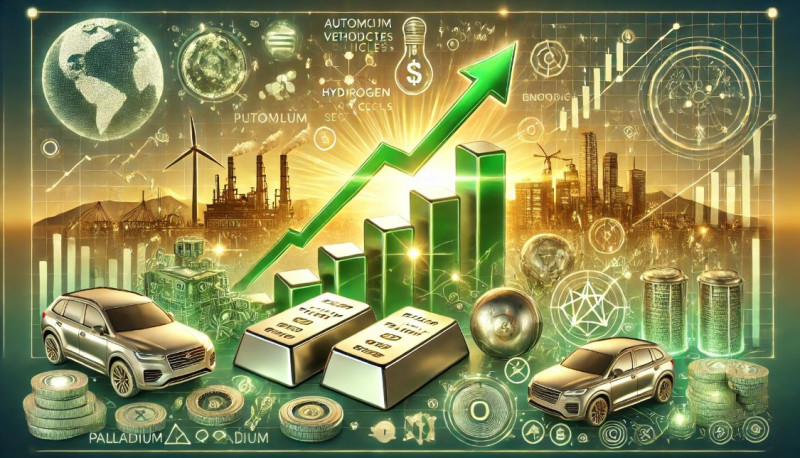
The rise in platinum‑group metal prices rests on a combination of tight supply, steady industrial demand and growing appeal as a store of value. These assets do more than accompany technological shifts — they are being embedded into the very structure of future energy, transport and industry. Given limited mining geographies and high sensitivity to external shocks, even small imbalances can trigger powerful price moves, making the price outlook for platinum less transparent.
Geopolitics and supply disruptions
South Africa and Russia control the overwhelming share of global production. South African mines provide up to 70% of output but regularly face domestic problems: unstable power supplies, strikes and infrastructure bottlenecks. Russia, the second‑largest exporter, is under sanctions that restrict direct shipments to some Western markets. With rising global tensions, the risk of export curbs and logistical failures becomes an immediate price driver. The shutdown of even a single large mine can create a spot shortage, especially when inventories are already at low levels.
Availability of sea routes and logistical stability are critical. Shifts in port control, conflict zones and limitations on insurance for shipments of rare metals all create a “risk premium” built into contract prices.
Rising demand for platinum‑group metals
Global auto production has started to recover. Vehicle sales — particularly in China, India, the US and EU countries — and investments in rare and strategic metals are increasing as supply chains stabilize and stimulus measures take effect. Even as electrification accelerates, mass production of hybrids and internal‑combustion vehicles continues, and those vehicles still require catalytic converters based on platinum metals. Growth in heavy‑duty transport, construction and agricultural equipment also supports steady consumption of these elements.
At the same time, a new pillar is forming: hydrogen energy. The G7 countries, China and South Korea are investing in hydrogen infrastructure. In electrolyzers used to produce “green” hydrogen, platinum‑group catalysts play a central role. Fuel cells for transport and stationary systems also require these components. As the hydrogen economy scales up, industrial demand will receive a second powerful boost.
Beyond transport and energy, demand is rising from electronics, medical equipment and chemical processing. Gradual replacement of less efficient technologies and stricter environmental requirements are increasing load factors across industries.
Inflation expectations and capital protection
Scarce, industrially critical metals are traditionally viewed as safe‑haven assets during macroeconomic instability. Under inflation, currency weakening and falling real yields on bonds, market participants rotate into tangible resources with limited supply. In this context, futures on platinum offer a unique mix: intrinsic physical value, industrial use and constrained production. That distinguishes them from traditional instruments that lack utilitarian underpinnings.
Compared with gold and silver, these metals often show stronger moves during market stress because they respond both to macro conditions and to news from the real sector. Correlation with equity indices remains low, and seasonal and speculative factors provide volatility that large funds and private players exploit.
Taken together — supply instability, rising industrial demand and global inflation expectations — form a structural base for long‑term price appreciation. These resources become not just traded commodities but strategic elements of the global economic transformation.
Downside factors
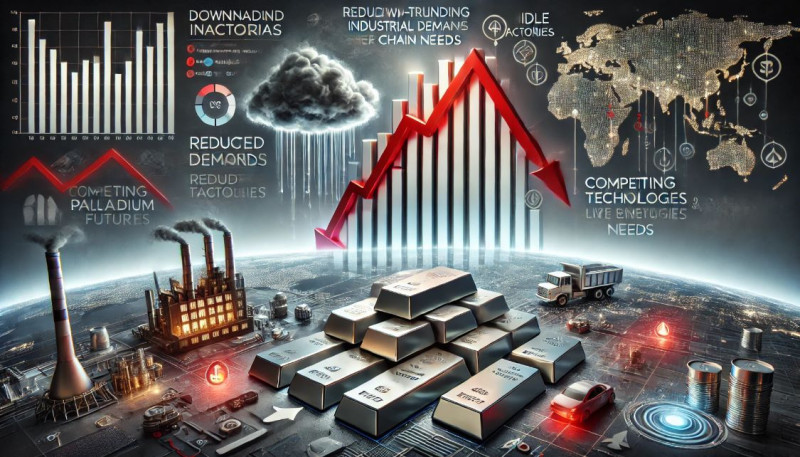
The precious‑metals market is exposed not only to explosive rallies but also to sharp drawdowns. Even assets with high industrial importance and constrained supply are not immune to pressure from macroeconomic, technological and logistical shifts. Several key factors can reverse the uptrend and trigger a structural correction.
Decline in industrial demand
Technological shifts in the auto sector can redistribute demand within the group of rare metals. One example is substitution of more expensive components with cheaper alternatives. Faced with rising prices and supply shortages, catalyst manufacturers have actively sought substitutes. Already there is evidence of a shift from palladium to platinum in gasoline applications. That could reduce demand for palladium and push its exchange price lower. This does not necessarily reduce overall demand for platinum‑group metals, but it creates imbalances in pricing among them; total consumption may remain stable or even decline.
Electrification of transport threatens the entire chain of traditional automotive component consumption. Battery‑electric vehicles do not require exhaust‑gas aftertreatment systems and therefore eliminate the need for catalytic materials. A rapid acceleration of the shift toward battery technology — particularly in China and the EU — could materially reduce demand for catalytic materials. Given that the automotive sector traditionally accounts for up to 70% of consumption, even a partial replacement of propulsion technologies could have a major impact.
Investment risks in rare metals
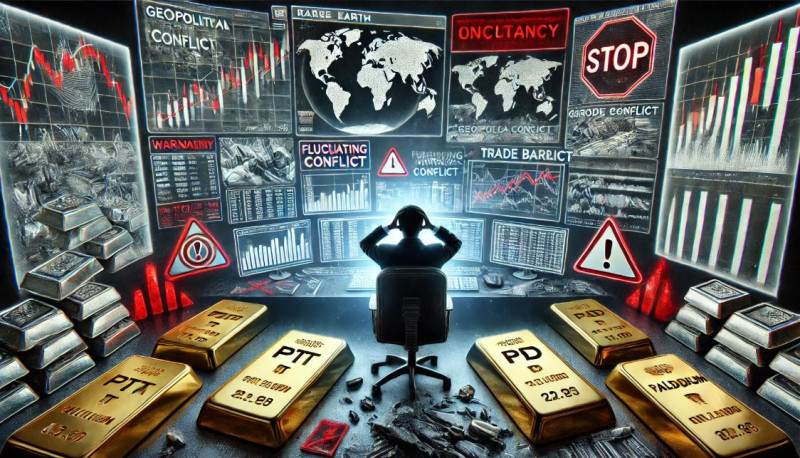
Trading derivatives, especially on commodities with limited turnover, requires accounting for several specific threats. Even with sound fundamental analysis, mechanisms remain that can cause losses regardless of trend direction. Futures on platinum‑group metals are highly volatile instruments with particular characteristics that traders must understand.
Limited liquidity
Not all contracts have equal trading volume. Liquidity can drop sharply during low activity or geopolitical instability. Wider bid‑ask spreads, slippage and decreased execution quality appear in such market segments. An open position in a low‑liquidity contract is vulnerable to sudden moves, especially when large players exit. Traders should also consider differences across expiries — near‑month contracts usually trade more actively, while distant months can “hang.”
Margin requirements and forced liquidation
Futures trading requires posting variation margin, which is recalculated daily based on price movement. In the event of a sharp move, the clearing system can demand additional collateral within a single day. This is particularly dangerous in high‑volatility environments when prices can swing strongly in the opposite direction. Even a fundamentally sound trade can be forcibly closed due to insufficient account liquidity. What happens if you fail to top up your account on time with an open platinum futures position? The broker has the right to liquidate it without prior consent.
Systemic and market risks
High sensitivity to external events makes these instruments vulnerable to:
- political announcements (e.g. sanctions or export controls);
- macro data (Fed rates, inflation, PMI);
- exchange or clearing‑house failures;
- technical outages at the broker or trading terminal.
Force majeure events cannot be excluded — sudden contract specification changes, expiry‑date postponements, or lot‑size adjustments. In times of uncertainty, such changes amplify market stress and may impact access to positions.
Working with futures on precious resources requires strict risk management. Leverage control, liquidity assessment, diversification across expiries and a clear understanding of margin mechanics are mandatory. These instruments provide powerful leverage but, without proper preparation, can inflict substantial capital losses.
Conclusion
Platinum‑group metals are assets with a unique combination of intrinsic value, limited supply and critical importance for numerous industries. Their price dynamics sit at the intersection of the global economy, technological trends and geopolitical turbulence. Prices can rise due to supply shortages, stronger demand from the automotive and hydrogen sectors and inflationary pressure. At the same time, risks remain — dollar strength, rising rates and technological substitution can limit upside or trigger a down phase; for example, palladium’s exchange price could fall.
Futures contracts on these metals offer high earning potential but demand high responsibility. They are not suitable for everyone and require a strategic approach. These instruments make most sense for:
- professional speculators and active traders who can rapidly react to news, macro releases and volatility, using short‑term opportunities, technical analysis and high‑frequency models;
- funds and institutional managers seeking diversification, where commodities with low correlation to equities play a role in a balanced portfolio during instability;
- industry hedgers — processors, manufacturers and distributors — who use futures as price‑risk insurance rather than speculation;
- macro‑oriented participants betting on the energy transition, hydrogen demand growth and industrial resource deficits.
We explored investment in rare and strategic metals. Without strict risk control and a solid understanding of market specifics, futures can quickly lead to capital loss. But with a systematic approach, precise sizing and competent position management, they become a powerful element of both speculative and defensive strategies. The key is to act on data, not on emotions.


 Back to articles

