



In this article, we explain how hedging with futures works and which hedging instruments help companies and investors reduce risks and protect capital
Hedging is a strategy for protecting capital from adverse price movements. Its essence is to lock in future risks in the present, limit the impact of volatility, and prevent market swings from destroying a business or financial model. In simple terms, risk hedging can be described as a tool for actively managing uncertainty that allows control over things that usually cannot be controlled: input costs, exchange rates, interest rates, product prices, and even reputational losses. Hedging is not just insurance but a systematic approach to managing financial stability.
The point of hedging is predictability. Companies that use this approach know their costs in advance. Entrepreneurs lock in purchase or sale prices before an event occurs. Finance teams build stability into budgets, reducing dependence on speculative factors. In an era when everything changes minute by minute, strategic predictability is a competitive advantage.
The most effective instrument for this is the futures contract. It is an agreement to buy or sell an underlying asset at a predetermined price in the future. This can be oil, grain, currency, electricity, an interest rate, anything that the market has. Unlike spot transactions, futures allow you to fix a price in advance and remove uncertainty. Thus, futures are the most suitable hedging instruments.
Why futures?
- Standardization. All contract parameters are set in advance: volume, delivery date, and margin requirements. This simplifies calculations, reduces errors, and increases transparency.
- Exchange trading. The entire infrastructure is provided by clearinghouses. Counterparties do not take on risk with each other, only with the exchange. This minimizes defaults.
- Liquidity. High trading volumes make it easy to enter and exit positions, even with large sums. This is especially important for businesses with high commodity turnover.
- Margin efficiency. The ability to control a large exposure with a relatively small collateral. This is effective when it comes to temporary protection or short‑term risk management.
- Flexibility. You can hedge not only the direct asset but also a proxy — for example, protect against rising aviation fuel costs via an oil contract, or offset export revenues in dollars using the dollar index or a currency pair.
Basics
A futures contract is an obligation to buy or sell a specific asset at a fixed price on a specified future date. Unlike oral agreements or private deals, a futures contract is a standardized exchange‑traded instrument. Parties do not negotiate directly. All terms except price are preset: volume, settlement date, and delivery terms. The trade is executed through an exchange that acts as the guarantor of performance.
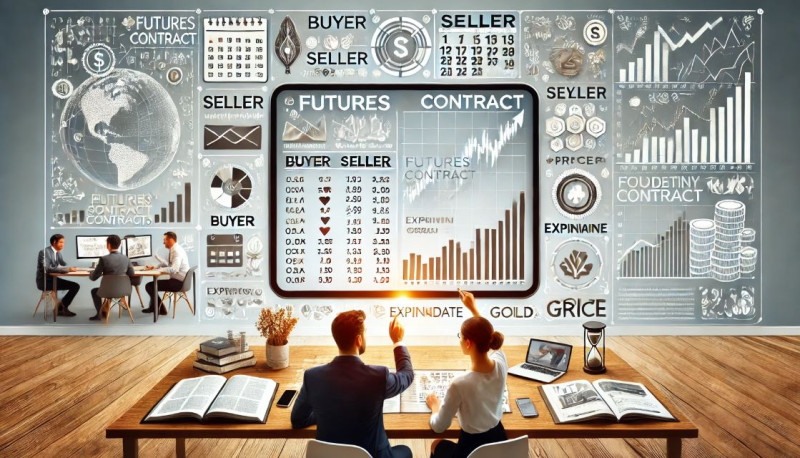
The purpose of a futures contract is to lock in a price in advance. This instrument is used when protection against price changes is important. You do not need to own the underlying asset to open a position. Hedging tools allow protection against price rises or falls simply via a contract. That is the essence of hedging.
Difference between futures and forwards
A forward is a bespoke, over‑the‑counter agreement between two parties. All parameters are negotiated manually: timing, volume, delivery basis, and settlement. The main risk is counterparty default. Enforcement is the responsibility of participants.
A futures contract differs in that it is:
- exchange‑listed;
- standardized in its parameters;
- cleared through a clearinghouse;
- subject to daily revaluation (mark‑to‑market);
- highly liquid.
A futures contract is a universal, liquid, regulated instrument. A forward is a customized agreement. The former is chosen for systematic use, while the latter — for unique conditions.
Key characteristics
Maturity refers to a settlement date. Contracts have precise time frames: March, June, September, December, etc. The expiry is chosen depending on the planning horizon and hedging objective.
An underlying asset is an item that the contract covers. This can be oil, gas, wheat, gold, dollar, euro, an interest rate, or a stock index. The key requirement is an active market and price volatility.
Margin is the sum a participant must fund as collateral. This is not a fee but a security deposit.
It is divided into:
- initial margin — the upfront requirement to open a position;
- variation margin — the daily recalculation based on market price changes.
The margining system protects the market from defaults. If prices move critically, the exchange will require additional collateral (margin call).
Types of futures
- Commodity futures — based on physical commodities: oil, gas, metals, grain, sugar, cotton. They are used by producers, processors, and exporters. Hedging with commodity futures eliminates many risks.
- Currency futures — contracts on currency exchange rates: USD/RUB, EUR/USD, etc. The main hedging tool for international trade.
- Interest rate futures — used to hedge against rate changes: LIBOR, SOFR, central bank rates. Relevant for banks, borrowers, and funds with debt exposure.
- Equity futures — linked to indices: the S&P 500, Nasdaq, RTS. Used to protect portfolios, build market‑neutral strategies, and offset market moves.
The choice of type depends on the risk that needs to be covered.
Basics of futures trading
Trading takes place on organized venues: CME, NYMEX, ICE, Eurex, Moscow Exchange. A participant enters the market through a broker. Trades are processed in real time.
The clearinghouse records positions, calculates margin, and ensures settlement. Parties do not bear counterparty risk with each other — only with the central counterparty. This eliminates the trust problem.
Each futures contract is strictly standardized:
- Exact contract size (for example, 1,000 barrels of oil)
- Clear expiry date (for example, the third Friday of the month)
- Defined settlement method (physical delivery or cash settlement)
- Contract currency (roubles, dollars, etc.)
Delivery under a futures contract can be of two types:
- physical — actual transfer of the asset occurs;
- cash settlement — only a cash compensation is made.
In most cases, the cash‑settled form is used. Physical delivery is chosen mainly by those who actually work with the commodity.
A position can be closed before the expiry date: an open trade is offset with an opposite one. This way, you do not have to wait for expiry and can simply lock in the result.
The futures market is a system with high speed, precision, and protection. It is governed by strict rules and requires discipline. If you talk about how risk hedging works in simple terms, this is where it is most clearly demonstrated: market participants use futures to protect business from price shocks.
Knowing the basic structure of a futures contract is the key to building a sound hedging strategy. Understanding these fundamentals determines the ability to manage risk, control costs, and build a resilient financial model.
Hedging: principles and logic
Hedging is the protection of financial or operational interests against adverse price movements. The essence is to take an opposite position in the derivatives market. If the price of the underlying asset moves against the business, the hedge generates a profit that offsets the loss.
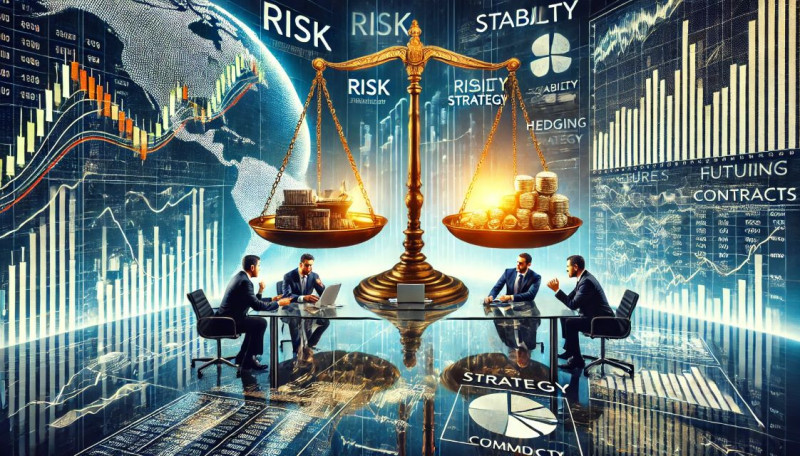
It works like this: a company faces a risk related to a price rise or fall. By entering a futures contract, it locks in the price in advance. At the time the event occurs, revenue from the core business may be lower, but the futures profit compensates the difference.
Example
A farm producer expects a wheat harvest in three months. To avoid dependence on a possible price drop, they sell a wheat futures contract today. If the price falls in the future, they profit from the contract. If the price rises, they lose money on the futures contract but sell the crop at a higher spot price. In any case, revenue is stabilized.
Hedging does not aim to make a profit. It protects against losses and stabilizes outcomes.
Types of hedgers
Producers are those who create the commodity and face the risk of price declines. Examples: farmers, oil producers, metallurgists. For them, a hedge is revenue protection.
Consumers are companies that depend on purchasing raw materials or currency and use hedging tools. Their task is to lock in costs. Examples: airlines (jet fuel), bakeries (flour), construction firms (steel).
Investors are participants exposed to asset price declines or currency losses. Hedges are used to protect capital from external factors. This applies to large funds as well as companies with export or import revenues.
Hedging approaches
Full hedging means covering the entire position. Example: an importer plans to buy $1m in two months. A futures contract is placed for the full volume. The price is fixed, so the risk is completely removed.
Partial hedging refers to protecting only part of the volume. It is used when uncertainty is high. Example: a wheat producer expects 10,000 tonnes but hedges 6,000 tonnes. This reduces the risk while leaving room for additional upside.
Cross‑hedging means using a related instrument when an exact contract is not available. Example: a company purchases kerosene but no kerosene futures exist. Brent crude is used due to high correlation.
Static hedging involves opening a position once and holding it until it expires. It is suitable for fixed volumes and dates.
Dynamic hedging involves adjusting the position when market or plan changes occur. It is used during periods of high volatility or uncertain volumes.
Hedging is a business management tool, not merely a market reaction. It provides price certainty, improves planning, and reduces dependence on short‑term swings. Strategically designed hedging protects profitability, manages debt loads, and builds resilient supply chains. Those who know how to hedge effectively emerge from instability with an advantage.
Futures hedging for business
Futures give businesses control over variables that were previously sources of risk: input prices, exchange rates, and transportation costs. Contracts allow key parameters to be locked in ahead of time. This is not speculation — it is a precise tool for managing the cost of goods sold, margins, logistics, and debt burden. Without futures, forecasts become conditional, budgets shaky, and financial models vulnerable to market moves.

A futures contract protects not only against price swings but also against supply chain disruptions. It fixes cost, shielding the business from seasonality and external shocks. Managers receive figures they can build strategy on, instead of guessing at quotes.
Hedging commodity risk
Metallurgy. Companies lock in prices for steel, aluminium, and copper. A rise in metal prices can wipe out contract margins. Selling futures on exchanges (LME, CME) allows cost‑of‑goods protection. A plant that signs a contract for 1,000 tonnes of aluminium at $2,400 no longer fears a rise to $2,800.
Agribusiness. Agricultural firms use futures on wheat, corn, and soy. The producer sells a futures contract ahead of harvest. That way, the price is known, and revenue, loan servicing, and procurement can be planned.
Construction. Dependence on cement, rebar, bitumen, and timber makes developers vulnerable to price shocks. Hedging via futures or derivatives on commodity indices reduces price stress and enables fixed‑price contracts with clients.
Currency hedging explained simply for exporters and importers
- Exporters. If the exchange rate falls, revenue translated into local currency decreases. A futures contract selling dollars or euros fixes the rate. For example, if $1m is expected in three months, a futures sale at the current rate locks that outcome. Even if the rate falls, the financial result remains stable.
- Importers. A rising exchange rate increases procurement costs. Buying a currency futures contract fixes the cost. For example, if equipment purchases in euros are planned in two months, a long futures position is opened. A rate rise is offset by profit on the contract.
How futures help with budgeting and price stability
Fixing prices via futures turns variable costs into stable ones. Procurement budgets are formed with high accuracy. Financial planning becomes reliable. Credit lines, cash flow, purchases, and sales cease to depend on daily quotes.
For business, this means:
- Ability to fix prices in contracts with clients;
- Confidence in project profitability for 6-12 months ahead;
- Increased transparency for banks, investors, and partners;
- Reduced likelihood of cash flow gaps.
Futures for traders
A futures contract is a core tool for cutting risk when trading in highly volatile markets. Its job is to preserve capital in times of stress. Volatility can destroy the edge of even the most precise analysis. Hedging with futures protects positions when a fundamental or technical view stops working.
Example: when you open a long spot position in gold, you open a short futures position at the same time. If the price moves against you, losses on the cash position are offset by gains on the derivative. By using hedging instruments, a trader preserves balance and liquidity.
Hedging with futures lets you ride out a news spike, seasonal volatility, or geopolitical turbulence without being forced to close your position.
Speculation vs hedging: how not to confuse them
The key difference is the presence of an underlying position. A hedge always protects something that already exists. Speculation is an attempt to profit from a move without exposure to a real underlying risk. Problems start when a hedge turns into a standalone bet.
Signs of true hedging:
- the volume of the futures contract corresponds to the underlying asset;
- the contract term is tied to the real exposure period;
- the goal is stability of results, not profit;
- losses on the futures leg are not treated as “mistakes.”
If a futures position is opened uncovered, without linkage to another asset or a clear logic, it is not a hedge. If it fails, it is a pure loss.
Futures are not a tool for “guessing” market direction. They are a system for precise control of risk, liquidity, and exposure. A trader who understands contract mechanics can build effective scenarios: from short‑term protection to a fully neutral portfolio. Proper use of futures makes your approach disciplined and scalable. Risk management ceases to be chaotic and becomes a strategic advantage.
Risks and limitations
Futures are a high‑precision tool, but not omnipotent. Used improperly, they can fail to protect — or even amplify — your vulnerability. The main danger is the illusion of control: a contract will not solve your problem if it is chosen incorrectly, if its specifics are not accounted for, or if infrastructural constraints are ignored.
Risk management is not only about protection — it is also about avoiding traps created by technical nuances, miscalculated margin, or insufficient liquidity. That’s why a hedging strategy, while potentially helpful, can be risky if mishandled.
Below is a structured list of the key constraints and risks when using futures, with explanations and practical recommendations.
| Risk or limitation | Essence | How to mitigate or control |
| Liquidity risk | lack of counterparties to enter/exit positions, especially close to expiry | trade liquid contracts; avoid deeply “thin” series |
| Slippage | the execution price is worse than expected | use limit orders; avoid market orders with large sizes |
| Margin call | an unexpected jump in margin requirements may force position closure | maintain margin buffers; run stress scenarios in your calculations |
| Forced liquidation | if funds are insufficient or limits are breached, the broker may liquidate positions | set alerts; monitor variation margin regularly |
| Legal and regulatory risk | rule breaches, sanctions, tax errors | work through regulated brokers; consult legal counsel |
| Technical failures and system outages | platform, server, or connection issues can cause missed trades | have redundant platforms; use stop-loss orders |
| Incorrect hedge sizing | incomplete coverage of risks or over‑hedging | validate your sizing model; account for hedge ratios |
| Wrong expiry date | contract expires before or after the actual exposure/event | choose the series that matches your business scenario |
| Tax consequences | improper accounting can trigger additional liabilities | consult accounting; document the business rationale for trades |
Hedging errors rarely occur at the moment of entry. Most losses with futures hedges stem from systemic miscalculations: incorrect correlation assumptions, lack of liquidity, or misalignment with the operational cycle. “Sleeping” risks are especially dangerous. They do not show up immediately but cause damage when market conditions change.
Futures require constant oversight. A single wrong expiry or a mis-sized position can turn protection into loss. Even a technically appropriate contract can fail due to legal or accounting mistakes.
The key to safety is not avoiding risk but managing it. A robust strategy should include stress tests, liquidity control, hedge ratio calculations, assessment of systemic resilience, and full documentation of decisions.
A skilled derivatives user not only protects assets but builds a business model resilient to market shocks.
Future of hedging and futures
Artificial intelligence is changing the way we manage risk. Algorithms now analyze volatility, forecast underlying asset behavior, and manage hedge entries and exits in real time. Algorithmic models detect correlations and adapt strategies to the macro environment faster than a human can.

Automation removes much of the human factor: a futures position can be opened or adjusted the moment an order arrives, an FX rate moves, or a demand forecast changes. Integrating hedge logic into ERP and BI platforms turns hedging into a seamless, end‑to‑end business process.
Blockchain brings transparency, instant verification, and contract execution. Smart contracts enable automatic settlement of futures when predefined conditions are met, reducing disputes and cutting settlement costs, especially across international logistics and commodity chains. Put simply, blockchain provides a reliable backbone for hedging by locking in trade terms in advance and minimizing the impact of price swings.
New markets and new assets
Futures are moving beyond traditional assets. Climate indices, water‑resource contracts, and ESG metrics are already trading. Tools are being developed to insure the cost of data, algorithmic computing, and cloud capacity.
Futures markets are emerging for data‑center electricity consumption, pricing indices for rare earths, carbon allowances, and logistics corridors. Anything that can be standardized and measured can be hedged.
Peer‑to‑peer hedging platforms are also developing, allowing companies to create contracts directly—bypassing exchanges and recording deals on blockchain—to reduce fees and increase flexibility.
Digitization makes futures accessible without intermediaries via mobile apps, APIs, and trading platforms. Local producers, farmers, logisticians, and tech companies can now hedge without opening an office in London or New York.
The future of futures is accessibility, automation, customization, and resilience. Hedging will cease to be a niche function and become an embedded part of business processes, from procurement to corporate strategy. The derivatives market will evolve into a next‑generation risk management ecosystem.
Conclusion
Futures are not a way to guess price direction. They are a tool that lets businesses, CFOs, and private participants manage uncertainty. A contract locks in a price, reduces volatility, and makes future costs or revenues more predictable. Well‑designed futures hedging is the foundation of resilience during market turbulence.
The market is no longer limited to classic commodities—you can hedge power, logistics, carbon emissions, climate indices, and more. A futures contract becomes the universal language between risk and certainty. Those who know how to use hedging tools build businesses on strategy, not luck.
Futures are not a gamble or an attempt to beat the market, but discipline, calculation, and control. They are the digital equivalent of a prearranged stability agreement. Managers who can hedge turn an unstable world into a zone of predictable movement, with accurate budgeting, clear profitability, and minimized shocks.
What to do today
- Identify what drives your revenues or costs: raw materials, FX, logistics, rates.
- Map that exposure to available futures: by type, term, and size.
- Calculate at least one hedge position using a basic model.
- Stress‑test the scenario: what happens if prices move sharply, and how does the futures hedge perform?
- Prepare a strategy template and integrate it into the budgeting process.
The most dangerous thing in futures hedging is not risk itself, but refusing to manage it. Start small: one contract, one model, one transparent calculation. Then lift your financial decision‑making to a completely different level.


 Back to articles

