



Not sure where to invest money for passive income, how to create passive income from dividend stocks, or how to select stocks for long-term investments?
In this article, we answer the question of where to invest money for passive income. Passive income is money that comes in regularly, without the need to actively work for each unit. It is a way to free up time, create a financial cushion, and live on your terms. This income continues to flow even while you sleep, on vacation, during a crisis, or during personal downtime. It is built on a systematic approach rather than chasing quick profits.
One of the most robust and predictable sources of passive earnings comes from companies that regularly distribute a portion of their profits among shareholders. These payouts occur regardless of market price fluctuations. Companies that have consistently shared profits for decades are not startups or speculative instruments; they are mature players with solid business models, stable cash flows, and a responsible management approach.
Why is this method particularly strong? Firstly, it does not require constant monitoring. Income can come quarterly or annually, and it can be reinvested—this includes the effect of compound interest. Secondly, unlike speculative methods, it offers much higher predictability: future income can be projected, allowing for planning over the years ahead. Thirdly, one of the advantages of creating passive income is protection against inflation—many companies increase payouts as profits rise.
This path is ideal for those who want not just to preserve but also to grow their capital with minimal emotional strain. It suits individuals who value stability over hype, who are ready to act thoughtfully rather than quickly, young individuals looking to build wealth, and mature individuals seeking security for the future. It appeals to those who are tired of the hustle for short-term results and want to build a foundation that works on its own.
There are no complicated schemes here; entry is available even with small amounts. The key is discipline, patience, and a systematic approach. You don’t need to be a financial guru. It’s enough to understand how the model works: you become a co-owner of a business that shares its profits with you, and you build an income that is independent of Mondays, bosses, and the job market.
What are dividend stocks?
Dividend stocks are shares in companies that regularly distribute a portion of their profits to shareholders. This is not just a right to capital appreciation; it is a source of direct cash flow. Owning such stocks means you receive income from dividend stocks, not through resale but through participation in profits.

The essence is simple: stable businesses that generate cash flow direct a portion of their earnings to their co-owners. Payouts are credited to the owners' accounts on a set schedule. This is real cash that can be spent, saved, or used to purchase new assets. Such companies typically operate in sectors with stable demand: utilities, consumer sectors, energy, telecommunications, and pharmaceuticals.
The payout mechanics are clearly regulated. The board of directors approves the amount of profit to be distributed. Key dates are then established:
- Declaration date – when the payment is officially announced;
- Record date – to receive the dividend, you must be on the list of owners by this date;
- Ex-dividend date – if purchased after this date, the right to income is lost;
- Payment date – when the money is credited to the account.
There are several types of distributions:
- Regular – paid consistently: quarterly, less often semi-annually or annually. This is the primary format for mature companies;
- Special (one-time) – distributed outside of the regular schedule, often upon asset sales or record profits;
- Quarterly – the most common format in the US, income is received every three months;
- Annual – more frequently found in Europe and Asia, depending on the financial year's results.
The key advantage of such stocks is not only the potential to earn and answer the question of how to select stocks, but also to build a predictable cash flow. Many companies increase their payouts each year, allowing investors to not only maintain their purchasing power but to outpace inflation. For the owner, this transforms into a financial machine that generates profit without daily involvement.
Regular inflows turn ownership into a tool that works for you continuously—without hustle, without guesswork, and without reliance on price increases.
How dividends are formed
The size of dividend payments directly depends on the financial health of a company. Without stable income and sound management, it is impossible to maintain consistent returns for shareholders. Key indicators to watch include revenue, net profit, and free cash flow (FCF).
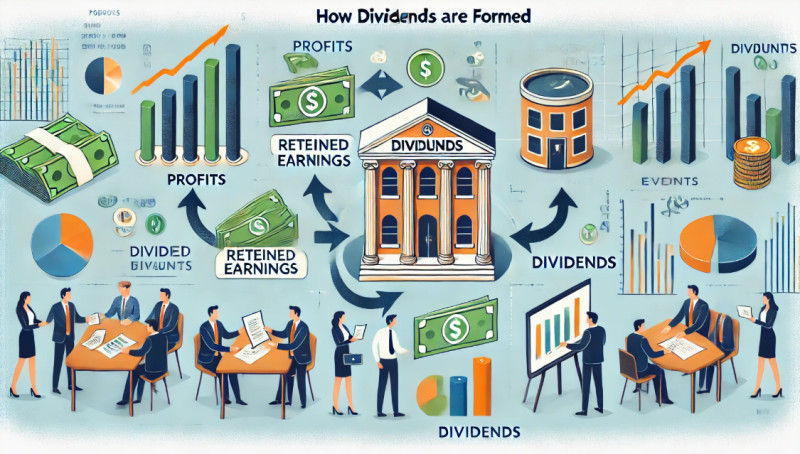
Revenue is the total volume of sales. It reflects how in demand a product or service is in the market. However, high revenue does not guarantee income for shareholders. What matters most is what remains after all expenses have been deducted.
Net profit is the money left after all costs, taxes, and obligations are accounted for. This profit forms the basis for distribution. But even with stable profits, not all income can be used for payouts. Where to invest money for passive income?
Free cash flow is the most reliable benchmark. This is the actual cash that remains after capital expenditures. FCF shows how much money a company has left after investing in development and infrastructure. The higher this figure, the more opportunities there are to distribute profits while continuing to grow.
The payout ratio is the main indicator of how generously a company shares its money. It shows what portion of profits is directed toward shareholders. For example, if the net profit is 100 million and 40 million goes to payouts, the ratio is 40%.
The optimal payout level depends on the industry. In stable sectors (utilities, telecommunications), a payout ratio of 60-80% is acceptable. In rapidly growing industries, a ratio of 20-40% is typical, as funds are reinvested for growth. If the ratio consistently exceeds 100%, this is a troubling signal: the company is paying out more than it earns, and such a trend will not last long.
The sustainability of payments is key to reliable passive income. This is evaluated based on the duration of the payment history, the stability of FCF, and the absence of abrupt changes in distribution policy. The best reputations belong to companies that not only consistently share profits but also increase their payouts year after year, regardless of economic cycles, and know how to create passive income.
Define your financial goals
A clear goal is the foundation of any strategy. Without it, no plan will work. It is important to know why you are building capital, what results you want to achieve, and when. Everything depends on this: the choice of tools, duration, investment amount, and distribution strategy.

The first question: how much passive income do you need?
If the aim is to completely replace your salary, that’s one figure. If you only need a cushion for partial freedom, that’s another. For example:
- 25,000 ₽ per month — basic coverage for utilities, transport, and internet;
- 50,000 ₽ — covering some expenses and ensuring confidence in tough times;
- 100,000 ₽ and above — partial or full financial independence.
By multiplying the desired monthly income by 12, you get the annual amount. Then divide by the expected return. For instance, with a 6% annual return to generate a dividend income of 600,000 ₽ per year, a capital of about 10 million would be needed.
The second key parameter: time horizon
How much time do you have to build this source? 5 years? 10? Closer to retirement or aiming for an early exit from the routine? The longer the timeframe, the stronger the effects of compound interest and reinvestment. Starting small is a normal strategy if time is available.
The third aspect: risk tolerance
It’s psychologically important to understand how comfortably you can handle drawdowns. Do you need reliability? Established companies with a long history of payouts would be suitable. Are you ready for volatility in exchange for future income growth? Then you can add higher-yielding but more unstable instruments. A combination of conservative and moderately aggressive assets is a common solution for balancing stability and growth.
Without a concrete goal, it’s easy to get distracted and act chaotically. When you clearly articulate, "I want to earn 60,000 ₽ per month in 7 years," everything simplifies. The numbers transform into a strategy. And the strategy becomes a tool for freedom.
Explore tax implications
How to choose stocks wisely?
Income may seem high on paper until tax legislation comes into effect. A smart approach to taxation allows you to keep more money, enhance real returns, and avoid legal issues. The difference between what you earn and what you take home is a key factor, especially with a long-term approach.

Most payouts are subject to tax. In Russia, the tax rate on income from foreign securities is 13% (or 15% for high incomes). If payments come from other countries, double taxation may apply—first in the source country, then in Russia. For example, the US automatically withholds 10-30%, depending on the presence of a W-8BEN form. Without it, the maximum withholding applies.
In some countries, such as Canada, Germany, and Switzerland, taxes can reach up to 35%. It is not always possible to reclaim withheld amounts; it depends on double taxation treaties between countries. Therefore, it is important not only to choose the right instrument but also to understand where it is registered and what deductions apply.
The Individual Investment Account (IIA) in Russia is a powerful optimization tool. Choosing Type A allows for a refund of 13% on the contribution amount (up to 52,000 ₽ per year). With Type B, income is exempt from tax. However, dividends from foreign securities are still subject to tax, regardless of the account type.
We continue to address the question: where to invest money for passive income?
The Individual Retirement Account (IRA) in the US is the equivalent of the IIA. It allows for retirement savings without paying taxes on capital gains or distributions until funds are withdrawn. Similar accounts exist in other countries: TFSA in Canada, ISA in the UK, and brokerage pension solutions in the EU.
Regular brokerage accounts require self-reporting and declarations. Some platforms will report information to tax authorities, but the responsibility lies with the account holder. Ignoring this aspect can lead to penalties or additional tax assessments.
Understanding the tax base is not a formality but a means to enhance efficiency. The less you lose when cashing out your income, the faster your total amount grows. Legal clarity, minimal losses, and maximum transparency are the three pillars of long-term success.
Choose a strategy
The financial outcome depends not on the number of purchases, but on the chosen approach. A clear strategy turns chaos into a system and allows you to build an income stream targeted at specific goals. At the outset, you need to choose a direction: growth, current yield, or balance. Each option for creating passive income has its own mechanics, risks, and horizons.
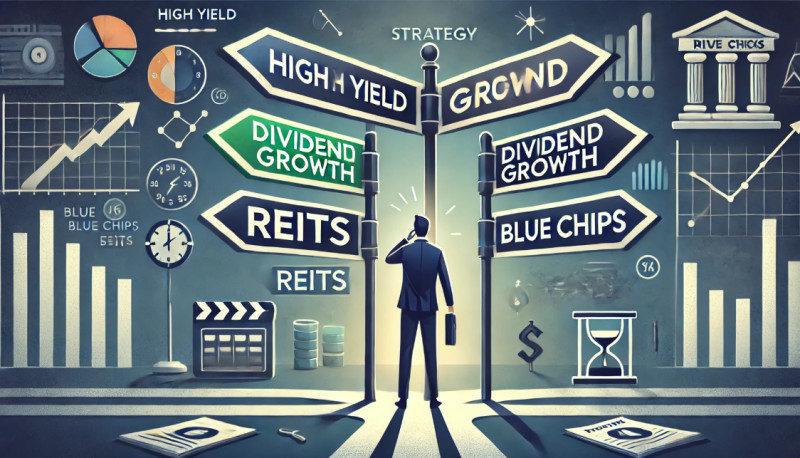
The growth strategy focuses on businesses that regularly increase their payouts. The key is not the current income size but the stable growth. Such companies pay less now but increase their payouts annually. Over 10-15 years, income from such stocks can multiply—without additional investments. This is especially effective with reinvestment. The portfolio includes large corporations that demonstrate stable revenue, growth in free cash flow, and disciplined management. Examples include businesses with a history of increasing payouts for 10-25 consecutive years. The main emphasis is on quality and reliability rather than maximum momentary yield.
The income strategy bets on maximum payouts right now. It is used when a cash flow is needed in the short term—for partial expense coverage or a passive salary boost. Returns here are higher, but fluctuations and risks of reduced payouts are possible. Often, this category includes real estate funds, infrastructure companies, and energy stocks. It is suited for those who prioritize current cash flow over potential growth. The key is to thoroughly analyze the stability of the business and the dividends received in relation to profits.
A balanced approach combines both directions. The portfolio contains reliable businesses with increasing payouts as well as sources of stable income with high yields. Such a portfolio is resilient to market phases, balanced in terms of risk and accumulation rates. This suits most investors—especially those who want both to receive and to grow their capital.
The correct strategy is tailored to your goals, age, time horizons, and comfort with volatility. The main thing is not to jump between directions. Once you choose a goal, you act according to the plan. This way, capital works in the right direction, without haste and random decisions.
Stock selection
An effective portfolio is not built on rumors and brand loyalties. It is constructed according to clear criteria that demonstrate the stability of the business, the reliability of payouts, and the high potential for real income. The primary task is to find those instruments that are not only capable of paying out but can do so consistently and with growth potential over the long term.
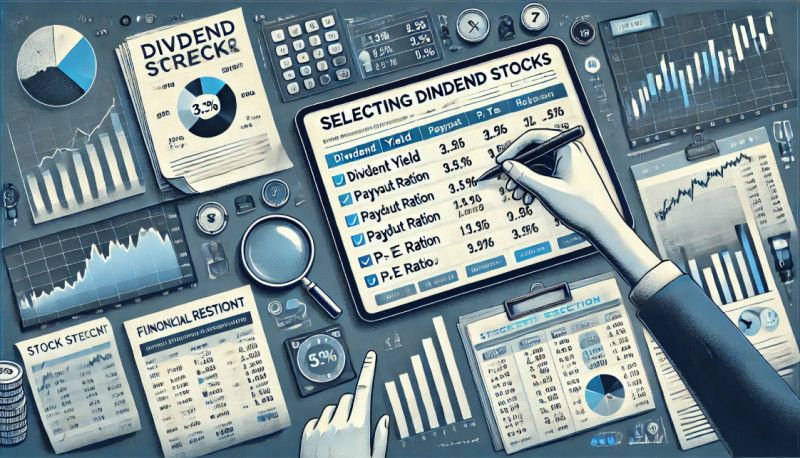
Dividend yield is the first filter. It shows how much a stock returns relative to its current price. The formula is simple: the annual payout amount divided by the stock price. For example, if the payouts are 50 ₽ per year and the price is 1,000 ₽, the yield is 5%. However, a high percentage is not always a plus. If the yield exceeds 8-10%, it’s necessary to investigate further: is this generosity or a warning sign? Often, excessively high yields indicate underlying issues—business decline, and payouts being at risk.
Stability of payouts is the foundation of confidence. This can be checked through history: how many consecutive years the company has shared profits, whether there have been cuts, and if regular increases have occurred. The best representatives are those who have paid consistently for 10, 20, or even 30 years without interruption. If payouts are growing, this serves as protection against inflation and enhances passive income flow.
Business quality is fundamental. Reliable income is generated by companies with stable sales, competitive advantages, and predictable cash flow. It’s important to study the sector, revenue model, debt load, and market share. Companies with simple, understandable logic and a strong position form the core of a strong portfolio.
Key Ratios:
- P/E (Price/Earnings) — how much you pay for one unit of profit. The lower the ratio, the potentially more advantageous it is, but it’s important to compare within the sector;
- P/B (Price/Book) — valuation in relation to book value. This is useful when selecting banks, insurance companies, and capital-intensive businesses;
- FCF (Free Cash Flow) — free cash flow. This pays dividends, not accounting profit. If FCF is stable or growing, the business is solid.
The answer to the question of where to invest money for passive income becomes clearer. The best instruments are those where adequate yield, stable payouts, financial discipline, and sound multiples coexist. These instruments form the foundation upon which a stream capable of supporting you for decades is built.
Diversifying investment portfolio
A reliable cash flow is built not on one idea or two, but on balance. When one segment declines, another compensates. A well-distributed portfolio reduces risks, smooths volatility, and preserves income even in unstable times. True diversification is not about holding ten similar stocks but rather about creating a thoughtful mix across sectors, geography, and business scale.
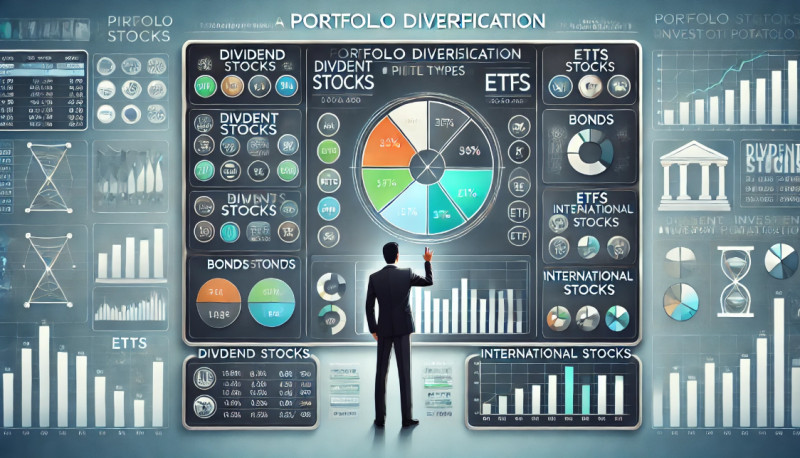
Sectors as the first line of defense
Different sectors perform variably during economic cycles. Energy and utilities provide stable returns during crises, while the technology sector may experience declines. Healthcare often grows regardless of the economic phase. Consumer goods ensure steady demand—people will continue to buy food, drink water, and use household chemicals. By adding shares from various industries and delving deeper into how to create passive income, you create a safeguard against imbalances: some companies consistently pay out, while others grow during upswings.
Geography and currency as the second layer of security
Depending solely on one country makes you vulnerable to its policies, taxes, regulations, and currency fluctuations. Adding assets from the US, Europe, Asia, or emerging markets not only broadens your reach but also grants access to different cash flows. Payments in dollars, euros, pounds, yuan, or stable local currencies can create a multi-currency income stream protected from devaluation.
Company size as the third level of balance
Large corporations, like global brands, provide stable payouts but grow slowly. Medium-sized businesses can manage to pay dividends while accelerating growth. Small companies are riskier but sometimes yield significant growth. Distributing investments among large, medium, and small companies creates a combination of stability and dynamism. One segment provides a foundation, while another offers acceleration.
A balanced structure makes cash flow sustainable and long-lasting. While one sector is experiencing a downturn, another is thriving. While one currency is depreciating, another is strengthening. When large companies stagnate, medium ones pick up the pace. This approach is not just protection against losses; it’s an intelligent system where different parts complement each other.
Reinvesting dividends
Passive income isn’t just about the money that comes into your account; it’s also about making that money work even harder. Instead of spending income immediately, there is a path that can exponentially accelerate capital growth. Reinvestment is the key to an effect that changes the game: compound interest. Dividend income reaches new heights when profits are not withdrawn but instead redirected back into the asset.
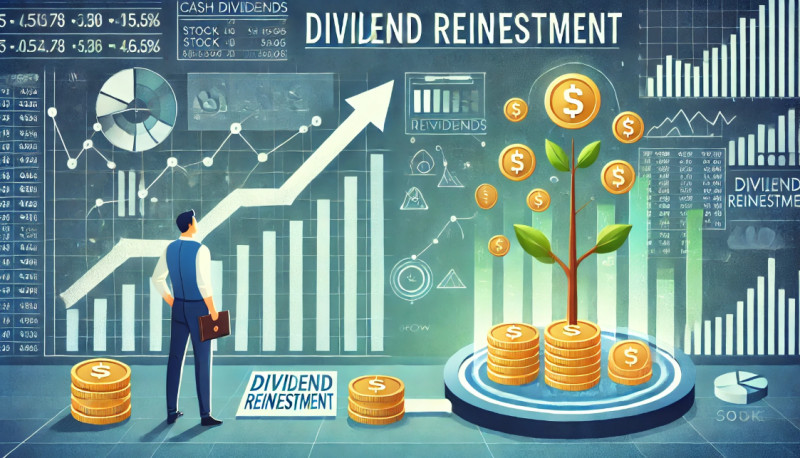
When income is reinvested, a chain reaction occurs. The received payouts buy new shares, and these new shares generate further payouts, continuing in a cycle. Over time, every ruble begins to yield not one, but ten. After 10–15 years, the difference between those who take distributions and those who reinvest them is enormous.
For instance:
- Initial capital: 1,000,000 ₽;
- Yield on payouts: 6%;
- Without reinvestment: 60,000 ₽ per year;
- With reinvestment: after 10 years — 1,790,000 ₽, income — 107,000 ₽ per year;
- After 20 years: 3,200,000 ₽, with an annual income exceeding 190,000 ₽.
This is not magic, but mathematics.
To automate the process, there’s a tool called DRIP (Dividend Reinvestment Plan). This program allows automatic reinvestment of payouts into new shares. There are no fees, no manual operations, and often even for fractional shares. Some platforms offer DRIP by default. The key is to connect it once and watch the snowball begin to grow.
Reinvestment is especially powerful at the start of the journey. The earlier the process begins, the greater the eventual outcome. Instead of simply receiving money, you build a machine that generates more and more each year. Not through luck, but through a system. Compound interest is an ally for the patient. It rewards those who do not rush to spend but choose to amplify their wealth.
Conclusion
In this article, we explored how to select stocks in the marketplace. A flow of money that comes without daily hustle isn’t a fantasy; it’s the result of a well-thought-out strategy. Regular payouts from reliable companies serve as a tool to transform ordinary capital into a mechanism of freedom. The key is to act not blindly, but according to a plan.
Building a sustainable cash flow begins with understanding your goals. A clear figure—how much you need to earn monthly—sets the direction. The time horizon determines how quickly you can reach that goal. Personal readiness for fluctuations indicates how aggressive the approach can be.
A smart selection of stocks starts with analysis—not flashy names, but concrete numbers. Yield, stability, cash flow, and financial ratios are the primary filters. A good business pays out not because it "has to" but because it “can.”
Building a portfolio requires balance. One sector may thrive while another may decline. One currency may strengthen while another depreciates. One region may offer higher payouts, while another provides more stability. When everything is distributed across different baskets, setbacks do not affect the entire system.
Reinvesting income is not just acceleration; it's a growth catalyst. When each ruble begins to generate new returns, and those returns yield even more, a powerful effect forms that cannot be ignored. It activates the force that Einstein called the eighth wonder of the world — compound interest. Thanks to this, we thoroughly explored the topic of where to invest money for passive income.
This approach does not require you to be a financial expert, does not necessitate guessing the market, and does not demand daily monitoring of charts. It requires only discipline. Step by step. Month by month. Quarter by quarter. Without rush.
A stable flow does not come suddenly—it is created. The sooner this journey begins, the sooner freedom arrives. You can live without depending on bosses. You won’t fear tomorrow. You can live on your own terms. Because the money will come on its own.


 Back to articles

