



Learn how to select stocks with growing dividends and create a portfolio of dividend stocks. We will discuss the dividend strategy for 2025 and the risks associated with investing.

Financial independence begins with a stream of regular income. One of the most accessible paths is participation in businesses that consistently distribute a portion of their profits to owners. Such companies provide access to cash flows without the need for ongoing involvement in operations, making decisions, or daily market activity.
This is not speculation; it’s a system. It works simply: you become a co-owner of a business and receive a portion of its profits on a regular basis. Moreover, the amount of these payments is often determined not by market prices but by the stability of the company itself and its financial discipline.
What makes these instruments especially valuable is their predictability. You can plan your income from them. Payments arrive on a schedule, and often companies strive not just to maintain their payment levels but to increase them year after year. This turns such assets into a foundation for savings strategies, a financial cushion, retirement, or even a monthly "salary" detached from an employer.
The popularity of such solutions among retail investors can be attributed not only to stability. This is a way to create a cash flow that does not require selling assets. In times of market instability, this provides a psychological advantage: even if the asset prices on the screen are falling, money continues to flow in. This allows investors to weather volatility and avoid selling at a loss. The material below explains how to choose stocks for investment.
Unlike instruments focused on rapid growth, these assets are tied to the actual revenues of companies and their ability to generate cash flow. There’s no betting on a future "revolution" or a new product; here, the bet is on proven models, scale, experience, market leadership, and resilience to economic cycles.
The purpose of this material is not just to highlight the advantages. It presents a step-by-step methodology for:
- Selecting companies that pay regularly and generously;
- Identifying sectors that are most resilient to crises;
- Protecting against dividend cuts;
- Allocating capital among sectors and countries to reduce risks and enhance returns;
- Using income to grow capital or receive a monthly cash flow.
You will get a practical algorithm, not just theory. It works regardless of the economic situation and is suitable for both beginners and those who already have a few stocks in their brokerage account.
This strategy is an alternative to chaotic attempts to outperform the market. There’s no need to guess entry and exit points. Instead of racing for growth, you participate calmly in a business that shares its profits. Instead of impulsive decisions, there’s a dividend strategy for 2025. Instead of relying on price movements, there are real payments hitting your account.
This approach is suitable for those who are tired of price fluctuations, want to have a cash flow without constant monitoring of news, and value financial stability.
In the following sections, we will cover how to select such companies, the metrics to assess them, where to find information, and how to create a balanced portfolio that continues to pay even when the entire market is in a panic.
Secret of popularity
A company earns money. After taxes, covering expenses, and investing in development, a portion of the profits remains. Some firms prefer to direct part of these funds to their owners. This is direct participation in the company's income. A person holding a stake in the stock market receives funds that are automatically credited to their account.

These payments can occur quarterly, bi-annually, annually, or even monthly. In the West, the most common interval is every three months. Some companies make monthly distributions—especially popular among those who build strategies for regular cash flow. Payments occur directly to the brokerage account or through an automatic system for reinvesting into new shares. The investment risks are minimal.
This format is convenient because it doesn’t require the owner to make decisions. Money comes automatically. All you need is to own the relevant assets on the record date.
How does this approach differ from buying stocks for growth? In the first case, the goal is a regular cash flow; in the second, it’s increasing the asset's value. The first path provides real money now, while the second offers hypothetical profits in the future, realizable only upon sale.
Companies that consistently share profits generally possess a mature business model. These include telecom operators, banks, insurers, consumer goods producers, energy companies, and infrastructure service providers. These players have been operating for decades, do not require aggressive expansion, have a stable customer base, and generate positive cash flow.
Investors choose such companies for several reasons:
- The first reason is automatic cash flow. There’s no need to sell assets to get money, which is particularly important during market downturns. Prices may be lower, but payments continue.
- The second reason is protection against inflation. Large corporations operating in the real sector can pass on rising expenses to consumers. This allows them to maintain or even increase payment levels despite rising prices in the economy. Thus, a portfolio of dividend stocks does not diminish. While savings accounts lose value, payments from businesses continue to flow in steady or increasing amounts.
- The third reason is the snowball effect. If you do not withdraw your income but instead direct it back towards purchasing new shares, your capital begins to grow geometrically. This is called compounding. Each year, not only does the number of shares increase, but so does the total amount of annual income. This approach allows you to grow an asset by dozens of percent without increasing your initial investment.
It is worth noting the psychological aspect as well. Receiving funds without the need to sell an asset reduces stress, eliminates rush, and creates a sense of control. Instead of guessing when the market will go up, an individual focuses on the cash flow. They build a systematic approach.
This strategy does not require constant presence in front of a screen. There’s no need to guess peaks and bottoms. The key is the quality of the companies and the reliability of their cash flows. With proper selection of such assets, one can create a structure that will pay out for decades. This forms the foundation for personal financial stability.
Next, we will discuss how to select such companies, which parameters to consider, what to focus on, where to find reliable information, and how to assemble a portfolio that can pay out regardless of market conditions and includes stocks with growing dividends.
How to choose a strategy
The first step is to determine why you need cash flow-generating assets. Without a clear goal, it is impossible to select the right tools. Creating a cash flow for covering current expenses is one thing; forming long-term capital appreciation is another.
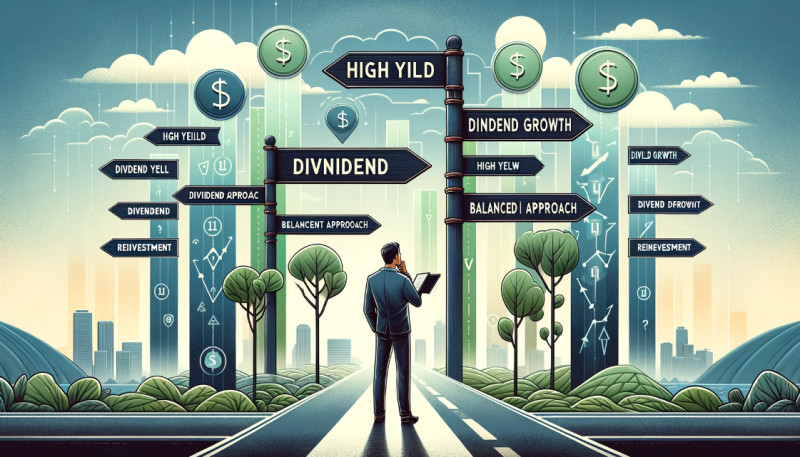
If a monthly cash inflow is needed, the choice will lean towards stable companies with regular payouts. In this case, stability, reliability, and predictability of income are critical. The main goal is cash flow here and now. This approach is often used to supplement or replace salary, provide an alternative to retirement, and ensure a basic level of living.
If the goal is long-term accumulation, the strategy changes. Growth becomes a priority. The approach focuses on companies that may not pay large amounts now but regularly increase their payouts year after year. The cash flow may be small, but the asset appreciates in value. Income can be reinvested, increasing the ownership volume. This approach creates the effect of compound interest and scales the capital over time.
The next parameter is the desired return. The average yield for large companies ranges from 3% to 6% per year. There are options higher than this—especially in real estate, infrastructure, and high-margin businesses. However, higher yields are almost always associated with increased risk. How do you choose stocks for investment?
If the goal is a 5-6% return in a currency with minimal volatility, you’ll need to select companies with strong balance sheets, consistent revenues, and long histories. If the desired yield is 8% or higher, you must be prepared for short-term drawdowns and market fluctuations.
It's important to consider your investment horizon. Short-term goals (1-3 years) require maximum stability. Companies sensitive to economic cycles do not belong here. The approach should be conservative, with a focus on stable cash flows.
Medium-term goals (3-7 years) allow for a moderate level of growth. You can include firms that increase payments, those with expansion potential, and sectors sensitive to the economy, but with predictable outcomes. Here, a balance between reliability and growth is crucial.
The long-term approach (7+ years) allows you to act with maximum flexibility. Over this timeframe, you can weather crises, recessions, and marketturnarounds. It is during this horizon that the strength of a reinvestment strategy becomes apparent. You can include promising growth-oriented companies and combine them with established firms focused on regular returns.
The next important element is the acceptable level of risk. A conservative model relies on stability: large corporations, protected sectors, predictability. This results in lower yields but a higher likelihood of capital preservation.
Dividend strategy for 2025
A moderate approach allows for greater volatility but keeps the focus on cash flows. The portfolio will include assets from less protected sectors, such as cyclical industries or technology with stable cash flows.
An aggressive option centers around companies that direct a large portion of profits into growth but still share some profits with owners. Here, the income can grow faster, but the stability is lower. This option suits those willing to endure drawdowns for accelerated growth.
Summary:
— Determine what is more important for you: regular income in the near term or capital growth in the long term;
— Specify what yield you expect to receive and how willing you are to tolerate temporary market downturns;
— Set a timeframe: in how many years should your funds start working toward your goals;
— Compare these parameters and formulate a strategy that aligns with your expectations, comfort level, and plans.
In the next section, we will discuss specific criteria for selecting assets for each type of goal, approaches to forming a balanced structure, and key indicators to focus on when assessing the reliability of companies.
A clearly defined goal is the foundation of any successful financial plan. Understanding the timelines, acceptable risk levels, and expected returns helps to avoid chaotic decisions, build a strategy that delivers real results, and minimize investment-related risks. From this point on, each asset in your portfolio will serve a specific purpose and work toward achieving your goals.
How to identify companies worth your attention: numbers, indicators, traps
The right choice begins with analysis. For cash flows to be stable, it’s not the flashy promises that matter, but the concrete metrics that reflect the business's ability to share profits and maintain momentum.

The yield-to-price ratio (DY) shows how much percentage return a single invested ruble or dollar brings per year. This is a benchmark but not an end goal. A high figure looks attractive but requires caution. The optimal range is 3-6%. Anything significantly higher is a signal to investigate further.
The payout ratio reflects what portion of profits a company directs to its owners. An ideal level is between 30% and 60%. If the ratio exceeds 80%, there may be sustainability issues. Such businesses risk cutting payouts at the slightest revenue decline.
The history of profit distribution is one of the main indicators. If a company has regularly increased payouts for 10-20 years, it indicates a mature business model and a responsible attitude toward owners. Ideally, there should be no instances of cancellations or reductions, making such companies suitable for inclusion in a dividend stock portfolio.
The reliability of a business is foundational. The model should be viable under any economic conditions. Industries with low sensitivity to cycles, such as telecom, healthcare, utilities, and essential goods, are particularly well-suited.
Free Cash Flow (FCF) is a key indicator. This is where the payments originate, rather than from accounting profits. If it is stable or growing, the company can share profits without threatening its operational activity.
In addition to numbers, qualitative indicators are essential. Strong companies are easily recognizable:
— Industry leadership: They hold top positions in their segments, possess strong brands, patents, and infrastructure. This provides a price advantage and stable demand;
— Consistent revenue and profit growth: Without these factors, it’s impossible to sustain high payouts for long;
— Transparency: Accessibility of reporting, forecasts, and management commentary are important. It’s not just about the numbers but also the market behavior: absence of scandals, lawsuits, and unpredictable decisions;
— Share buyback program: This is an additional plus. If management is buying back shares, it indicates confidence in the business's sustainability and strengthens the positions of remaining owners.
However, even among seemingly attractive companies, traps can exist. One of the most common is abnormally high yields. If the figure is above 8-10%, there are almost always underlying risks, such as declining prices, unstable profits, or impending payout cuts. This is a trap that often ensnares novices. Such stocks with high dividends should not be purchased.
Declining profits are a direct signal to be cautious. If a business earns less year after year, it may not sustain its previous level of generosity. One should look not only at absolute numbers but also at trends.
Past cuts are another red flag. Even if payouts have been restored, the fact of prior reductions indicates that the company has previously gone down the path of cuts. It could mean repeating such actions in the future.
The main rule is not to chase the most impressive numbers. Stability is always more important than a one-time impression. Better to have a stable 4% than a risky 10% that could turn to nothing.
Next, we will discuss how to assemble a portfolio of such companies, balance it across sectors and types of returns, and ensure that income remains regular, secure, and growing.
Company selection strategies
The "aristocrats" model: predictability backed by time
Companies that consistently increase payouts to their owners for more than 25 consecutive years are the epitome of reliability. In the US, there is a separate index for such stocks — the S&P 500 Dividend Aristocrats. This index includes businesses that have weathered recessions, crises, and technological revolutions while continuing to increase their distributed profits.

Among them are well-known global brands in consumer goods, healthcare, industry, and communications. Their main advantage is discipline. The management of such companies does everything possible to maintain a long-standing tradition, as the market perceives any disruption as a blow to their reputation.
This approach provides confidence in predictable cash inflows and the growth of these amounts over time. It is suitable for those who value stability, are willing to invest for years, and are not chasing high yields here and now. What is important to know to choose stocks for investing in these companies?
Growth of dividends approach: scalability and snowball effect
The next strategy revolves around companies that annually increase their payouts but have not yet achieved "aristocrat" status. Such businesses typically have lower payouts than the leaders from the previous section, but their growth rate is higher.
This approach focuses not on maximizing current income but on gradually increasing cash flow. Over the years, the amount credited to the account increases—thanks both to the growth of the payouts and to reinvestment.
This strategy is suitable for those who are betting on scalability. It works excellently in the long term, particularly when utilizing compound interest. Here, the critical factors are revenue growth, healthy cash flow, and the potential for business expansion.
High current payments strategy: maximum here and now
The third path focuses on maximizing cash flow in the present. This involves including companies operating in specialized sectors: real estate (REITs), business structures with mandatory profit distribution (BDCs), and energy partnerships (MLPs).
Yields on such stocks often exceed 6–8%, but there is an important "but" — they are more sensitive to economic changes, interest rates, and legislation. These companies are required to direct a significant portion of their profits to owners, making them particularly attractive for obtaining regular payments.
Cons: volatility, unstable growth, sector dependency.
Pros: strong cash flow immediately upon purchase. This is an excellent option for creating a source of monthly income—especially in portfolios where quick capital return is needed.
Geographical distribution: expanding horizons and tax optimization
Don't limit yourself to one country. Different regions have different sectors, stages of the economic cycle, and approaches to profit distribution.
- US: A leader in the number of stable companies with a long history of payouts;
- Canada: A strong market for finance, utilities, and infrastructure, often offering higher payouts;
- UK: Traditionally high cash flows to owners, with frequent quarterly payments;
- Asia (especially Singapore, South Korea, and Japan): Provides access to growing markets with unique opportunities.
An additional benefit is the risk reduction. Investment-related risks take a backseat. When one market shows weakness, another may offset this with growth. Different tax regimes also allow for structuring the portfolio to achieve maximum net income.
Geography is an important element of protection and growth. The broader the distribution, the more resilient the structure. This is especially relevant for large portfolios and strategies aimed at decades.
Each of these strategies can serve as the foundation or part of an overall model. The choice depends on the objectives: whether maximum immediate cash flow is needed or a bet is placed on future growth. Ideally, a combination of both strategies should be employed. A skillful assembly of "aristocrats," growing businesses, income-generating machines, and international assets can build a powerful system that will work regardless of market conditions.
How to build balanced portfolio with regular cash flow
The main goal is a stable income, protected from external risks. To achieve this, it is not enough to simply select a few well-known businesses. It is important to create a system in which each element complements the others.
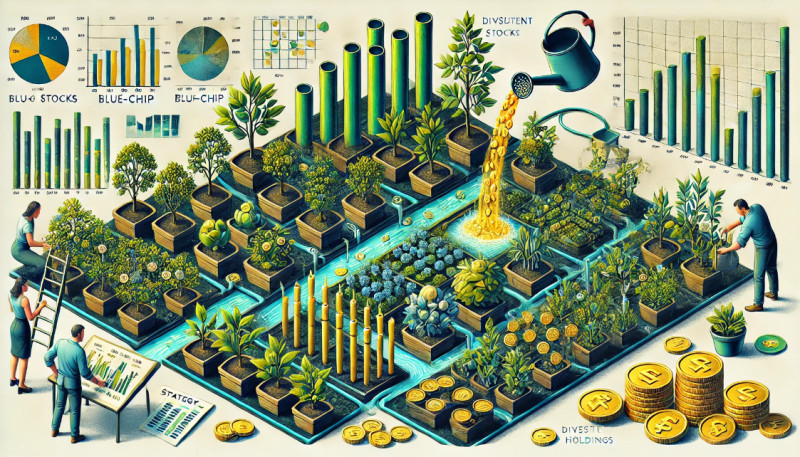
A balanced portfolio is not just a list of companies. It is a construct where everything is carefully thought out: positions are distributed among sectors, risk levels, geographies, and potential growth. In this case, a dividend stock portfolio can be considered fully composed.
Sector allocation: foundation of stability
| Energy | Companies that provide light, heat, and fuel are highly resilient. They often generate good cash flows and exhibit high predictability. |
| Communications and telecom | People pay for internet and mobile services under any conditions. This sector is considered defensive, and operators often have a long history of dividends. |
| Financial sector | Banks, insurers, payment services. Good sources of income, but sensitive to interest rates and regulations. |
| Healthcare | Pharmaceuticals, biotechnology, medical services. Demand remains even during crises. They tend to pay consistently and grow over time. |
| Consumer goods | Companies producing food, beverages, and household chemicals. People purchase them regardless of the situation. This sector provides reliability and steady growth. |
The best idea is to cover at least 4-5 different sectors. This will reduce risks and ensure stable income streams. Stocks with growing dividends will be justified.
How many companies should be included
A minimum of 10-15 companies is advisable. Fewer than this creates too much dependence on individual elements. One failure can cause the entire structure to falter.
If the entire portfolio is built on 2-3 businesses, you are taking on a risk that could easily be avoided. Even reliable corporations face challenges: management changes, new laws, and reputational risks.
The more quality issuers there are, the greater the resilience of the entire model. This protects against unforeseen events and serves as a foundation for long-term cash flow.
Examples of structure: from conservative to aggressive
- Conservative approach
Goal: stability, minimal drawdowns, predictability.
Composition:- 30% Utilities and energy;
- 25% Consumer sector;
- 20% Telecom;
- 15% Healthcare;
- 10% Tier 1 banks.
This model provides a 3-5% yield in currency with minimal volatility. It is excellent for those who seek tranquility and a reliable income.
- Balanced approach
Goal: Combination of stable flow and moderate growth.
Composition:- 25% energy and utilities;
- 20% consumer sector;
- 20% telecom;
- 15% financial sector;
- 10% healthcare;
- 10% growth-oriented companies.
There is potential for increasing cash flow thanks to companies that currently pay little but consistently raise their amounts. How to choose stocks for investment in aggressive sectors?
- Aggressive approach
Goal: growth in cash flow and capital.
Composition:- 20% companies with regular dividend increases;
- 20% technology sector (with a small income share);
- 15% REITs;
- 15% energy;
- 10% emerging markets;
- 10% healthcare;
- 10% consumer brands.
This approach offers higher yields from the start but requires more patience. Fluctuations and temporary drawdowns are possible, but after several years, income amounts could double or triple.
A balanced structure is not a template; it is a living system. It can be adapted based on age, goals, risk tolerance, and time horizon. The key is not to rely on a single source and not to chase excessive yields.
The formula for success includes diverse sectors, reliable companies, sufficient quantity, and clear logic in distribution. Income should flow in any weather—this is the strength of true passive income.
Conclusion
Regular cash flow from equity participation in mature businesses is not an illusion but a real mechanism for creating financial stability. This approach works not by trying to guess market direction but through systematically owning quality assets that generate profit regardless of the news backdrop. The dividend strategy for 2025 is a sensible investment in your future.
A well-structured portfolio with regular cash inflows is not just a means to receive money; it is a personal cash mechanism that can be tailored to specific goals: a monthly cushion, an exit from employment, financial independence, or support during crises.
The main advantage is predictability. Unlike chaotic attempts to outperform the market, everything here operates according to a clear scheme. You own shares in companies that share profits, and if selected correctly, they do so consistently and with increasing totals.
But the main secret of success is not in the number of stocks, predictions, or analytics. It is in discipline. The ability to stick to a strategy, resist noise, and avoid jumping from one instrument to another. In this approach, it is not the one who acts quickly that wins, but the one who acts systematically.
Patience and a long-term perspective are essential. This is not a method to get rich in a month. It is a system capable of providing for decades. The cash flow grows along with the business, is enhanced through reinvestment, and over time turns into a reliable source of income.
Investment risks
Diversification is insurance against unpredictability. You should never put everything into one sector, one country, or one issuer. A reasonable distribution across industries, regions, and yield levels transforms the portfolio into a strong structure that can withstand crises, recessions, and localized issues.
Every element in the structure should perform its role. Some businesses serve as reliable anchors, others as sources of growth, and still others as enhancers of the current flow. Together, they create a balance: stability today and growth tomorrow.
You don’t have to start with a large sum. Even a few hundred or thousand per month directed toward quality instrument sets the mechanism in motion. The most important thing is not to delay starting. While your money sits idle, you lose not only interest but also time that could be working for you.
With each month, year, and decade, a financial system built on regular inflows becomes stronger. It is not dependent on an employer and does not react to market sentiments as sharply, granting you freedom—the kind that cannot be bought but can be built. The dividend stock portfolio expands and strengthens.
Start small, but start. Open an account. Choose a stable company. Receive your first payment. Feel how it works. From this moment on, everything is in your hands.
This strategy doesn’t require genius. It requires consistency. And it is definitely worth becoming a part of your life.


 Back to articles

