



It is a detailed analysis of cocoa futures with price forecasts, expert opinions, market trends, and key events that affect cocoa prices.
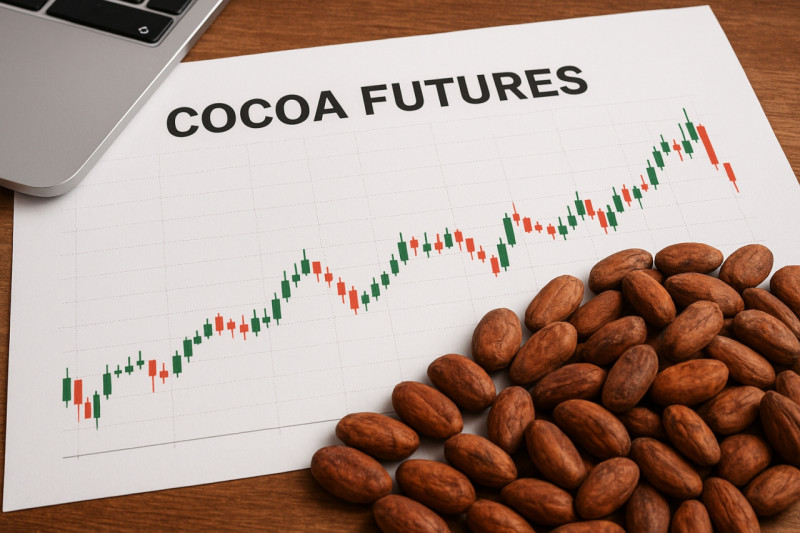
Soft commodity prices have recorded historic gains in recent months. Contracts tied to key agricultural supplies have doubled in value since early 2024. The driver was an acute shortfall. Producers in West Africa, responsible for roughly 70% of global volume, cut shipments amid climate disasters, farmer strikes, and damage to logistics infrastructure. At the same time, demand from processors remained high. The balance between supply and consumption broke. The physical market moved into a phase of structural deficit.
The primary hit fell on yields. Heavy rains followed by drought wiped out a significant share of young trees. Crop diseases, outdated processing technology, shortages of fertilizer, and labor all intensified the crisis. Political instability in producing regions added pressure. Local authorities imposed export controls, raised taxes, and froze contracts with overseas buyers. Against that backdrop, exchange prices accelerated.
Market participants saw portfolio diversification opportunities. The asset outperformed other agricultural instruments. Volatility reached levels comparable to energy markets. Institutional players, large funds, and hedgers sharply increased volumes. Short‑term traders began to use the instrument as an alternative to traditional speculative strategies.
Macro risks also fueled interest. A slowing global economy, weakening emerging‑market currencies, and rising inflation created demand for limited‑supply but highly liquid assets linked to everyday consumption, such as cocoa futures. Prices for these assets rose accordingly.
This article focuses on the causes of the current price wave, the market logic, price forecasts, delivery scenarios, the positions of major players, and expert views. The aim is to provide a systematic understanding of what is happening, where the market is headed, and what opportunities appear for participants amid instability.
Global market overview
Primary production is concentrated in West Africa. Côte d’Ivoire supplies more than 40% of global output, while Ghana provides about 15%. Nigeria and Indonesia follow. These regions depend on a stable climate and seasonal rainfall.

Any deviation, including torrential rains, droughts, or high temperatures, immediately affects yields. Outdated farming methods, limited fertilizer use, and low mechanization increase production vulnerability. Low farm income and restricted access to finance hinder modernization.
Political conditions remain unstable. In Côte d’Ivoire and Ghana, disputes arise over raw material pricing, subsidies, taxation, and export tendering. Power outages and inflation in the region impair logistics and raise production costs. Any strike or government intervention in export policy triggers instant price jumps on exchanges.
Demand concentrates in Europe, the United States, and a growing Asia. Germany, Belgium, and the Netherlands are leading processors in the EU. The United States imports for domestic processing and re‑export of higher‑value products. China and India are increasing consumption as incomes rise and demand for premium products grows. Buyers now favor certified, ethically sourced goods. Fairtrade and Rainforest Alliance labels command premiums. This shifts demand structure and sets new industry standards.
Trading instruments, reflecting this commodity price, is concentrated on ICE Futures US, ICE Futures Europe, and NYSE Liffe. Contracts are standardized by volume, delivery month, and quality. The typical contract covers 10 tonnes with delivery in specified months. Liquidity concentrates in near expiries. Margin requirements vary with volatility. Market participants range from hedgers protecting producers and processors to speculators trading price swings.
Exchange prices depend not only on yields but also on the dollar exchange rate, inflation, Federal Reserve policy, and global capital sentiment. A rising number of market participants increases the influence of technical factors: support levels, correlations with other commodities, and algorithmic strategies. The instrument moved beyond a narrow agricultural niche and became part of the global commodity complex.
Fundamental drivers
Climate anomalies have become a primary source of instability in agricultural markets. El Niño, a cyclical natural phenomenon, disrupts rainfall and temperature balances in equatorial regions. For cocoa‑growing zones in West Africa, this means either prolonged drought or catastrophic downpours.
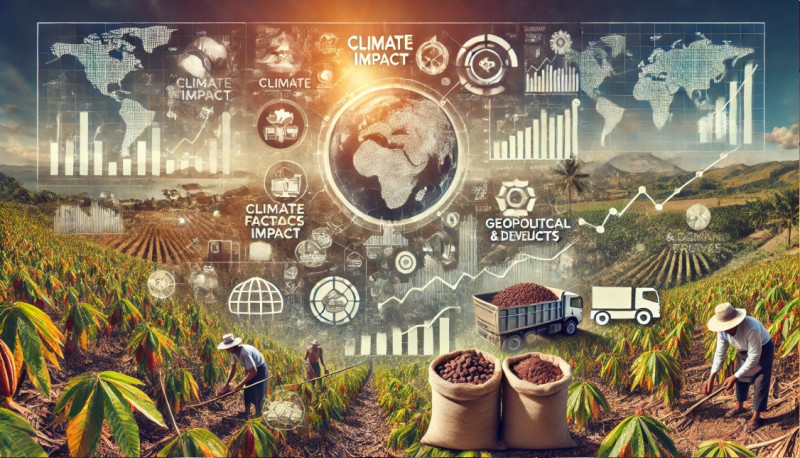
In 2023–2024, Côte d’Ivoire and Ghana experienced persistent rains during flowering, which reduced collection volumes by almost 30% versus the previous season. In Indonesia and Nigeria, dry months killed young trees and lowered fat content in the beans.
Tree age is a hidden threat. A plantation’s productive life typically runs 25–30 years, yet a large share of trees in major exporters exceed that threshold. Without large‑scale replanting programs, yields will continue to fall. Diseases such as black pod and Swollen Shoot Virus are spreading faster. A shortage of qualified agronomists and limited access to agrochemicals worsen the situation.
This latent productivity decline makes supply less flexible and sharply constrains the ability to scale volumes in the short term.
Political factors are moving to the fore. In several supplier countries, corruption remains high, tax regimes are unstable, and conflicts of interest persist among governments, cooperatives, and exporters. Decisions on floor prices, quotas, or export duties are often made manually and without market rationale. Such interventions produce instant price shocks in external markets. Strikes, farmer protests, and logistics breakdowns caused by political crises immediately disrupt flows of raw material.
Social pressure is intensifying. International organizations demand the elimination of child labor and require provenance controls. Retailers and processors must rework supply chains, prioritizing certified sources. That raises raw material costs and reduces availability for traders who rely on informal channels. Market segmentation along ethical lines has created parallel channels with differing liquidity and pricing. Analyzing cocoa futures has therefore become more complex and less predictable.
The macroeconomic environment adds another layer of volatility. A stronger dollar makes exports less profitable for developing producers and reduces their incentive to expand supply. For buyers, whose currencies have weakened versus the dollar, imports grow more expensive, and consumption patterns shift. Global inflation, high borrowing costs, and instability in equity and sovereign debt markets push capital toward commodity assets with tangible backing.
Investor behavior is adapting to this new reality. There is growing interest in commodities as a hedge against currency depreciation. Institutional portfolios are increasing allocations to agricultural contracts with long‑term exposure. An asset with constrained supply, acute weather sensitivity, and exposure to social turbulence becomes not merely a vehicle for speculation but a tool of strategic positioning amid global change.
Technical analysis of futures contracts
The price history over the past 10 years shows highly uneven dynamics. From 2014 to 2016, the market fell steadily: from above $3,200 per tonne to below $2,000.

The cause was overproduction combined with weakening demand and a stronger dollar. In 2017–2018, prices consolidated in a $1,800–$2,500 range. In 2019, a gradual recovery began as growing cultivation problems in West Africa and larger offtake by processors tightened the market.
Cocoa futures price and near‑term outlook
The pandemic shock marked 2020: logistics stopped, and global consumption fell, pushing quotes briefly to $2,200. By mid‑2021, the contract had recovered above $2,600. In 2022, the uptrend accelerated amid early signs of shortage. 2023 was a turning point: a period of steady gains was followed by a vertical surge in Q4 to $3,800. Spring 2024 brought a historic peak above $10,000, driven by collapsing yields in Côte d’Ivoire, widespread supply disruptions, and a spike in speculative interest.
The current technical picture points to a long‑term uptrend. The $3,800–$4,000 area has established itself as base support after consolidation in spring 2025. Key resistance sits near $11,000, the level of the record high. A clean breakout there could push prices toward $12,500–$13,000 as the impulse phase extends. On pullbacks, $8,600 and $7,200 are the nearest zones of interest, where strong volumes and previous reversals were observed.
Technical indicators show high overbought readings, but the gap between fundamental supply constraints and current prices is not yet critical. RSI and MACD remain in bullish territory. Daily charts display flag and pennant patterns, which typically signal corrective pauses inside a primary uptrend.
Since 2023, hedge‑fund interest has grown sharply.
As a result, expert price forecasts for cocoa have diverged sharply.
Open interest nearly doubled, with a notable shift into longer‑dated contracts. Derivatives are now used not only for hedging but also to monetize anticipated imbalances. Institutional money accounts for more than 60% of trading volumes on ICE Futures US and ICE Futures Europe.
Trading volumes have shown exponential growth. At peak in March–April 2024, contract counts exceeded historical norms by two to three times. Volatility reached levels on par with oil and natural gas: average daily moves exceeded 5–6%, which is rare among agricultural products. That attracted high‑frequency strategies and speculative players seeking short impulse moves.
Compared with other agricultural assets such as sugar, coffee, or corn, this segment stands out for its extraordinary sensitivity to the news flow. Any report of logistics disruptions, climate catastrophes, or policy decisions by producer country governments triggers a reaction within hours. This pattern makes the asset an ideal venue for algorithmic systems and agile trading strategies.
Retail participation is rising. Low‑entry platforms, mobile apps, and social media channels such as TikTok and YouTube have drawn a large number of non‑professional traders. Their activity amplifies impulses during sharp moves, both up and down, increasing volatility and creating short‑term anomalies that large players quickly arbitrage away. Cocoa quotes remain unstable.
Over the coming months, the probability of sustained upward pressure is high, accompanied by periodic sharp pullbacks. Price behavior depends increasingly on market structure, news flow, and global liquidity, not only on weather or yields. What was once a niche agricultural contract has become a strategically important indicator of instability and inflation expectations.
Forecasts from banks and analytical agencies
Rabobank rates the current season as one of the most critical in two decades. The bank estimates the global supply shortfall for 2024–2025 could exceed 450,000 tonnes. If yield trends in Côte d’Ivoire and Ghana persist, the deficit will deepen next season. In Rabobank’s base case, the average price in 2025 is $8,800 per tonne, with a material probability of a break above $10,500 if shipments fall further.

JP Morgan stresses the macro‑financial angle. The bank judges that the supply shortfall is already priced in, but structural risks are not fully reflected in the long end of the futures curve. Despite intermittent corrections, JP Morgan expects the upward trend to persist at least through the end of 2025. The bank sees an elevated chance of consolidation in the $9,500–$11,000 range, with upside if fresh climate shocks occur.
Goldman Sachs treats the market as part of a long‑term commodity supercycle. Analysts point to overlapping forces: underinvestment in agricultural infrastructure, an ESG shift, supply chain declines, and rising processor demand. Goldman’s base case for end‑2025 is $10,200 per tonne. An aggressive scenario allows a rise to $12,000 if an extended El Niño triggers another crop failure.
Fitch Solutions confirms worsening supply conditions. Its review notes the lack of replanting programs in Africa and political interventions in export policy as drivers of persistent deficit. Fitch’s year‑end forecast is $9,100 per tonne, with a possible correction to $8,300 if weather normalizes.
Consensus Economics aggregates more than 20 leading teams. As of May 2025, the median year‑end forecast is $9,750 per tonne. The range is wide: $7,600 at the low end and $12,400 at the high end. Disagreement centers on the recovery speed of yields and political stability in West Africa.
Bank of America Merrill Lynch sees overheating risk. Its analysis attributes the rapid 2024 price surge not only to fundamentals but also to a sharp inflow of short‑term capital. Even a correction to $7,800 would not, in BofA’s view, negate the underlying bullish trend. The bank says cocoa futures could hold above $11,000 by 2026 if processing capacity in Asia continues to expand.
Independent research firms such as Hightower Report and INTL FCStone flag rising volatility risk. They expect technical pullbacks of 15–20% from peaks, but they note that structural shortage makes each dip a buying opportunity for major players. Analysts recommend monitoring weather‑economic cycles and the behavior of distant contracts as leading indicators.
Bottom line: major market participants broadly agree that the current balance has shifted toward a persistent deficit. The main uncertainties remain weather in West Africa and institutional behavior at elevated price levels. The medium‑term trend is upward. Short‑term retracements are likely and are being used to accumulate positions in anticipation of further gains.
Future of commodity asset: role, trends, scenarios
Agricultural commodities with constrained supply are becoming a strategic component of a diversified portfolio.
Alt: Global cocoa exchange set against a futuristic city skyline
Comparison with other assets:
| Asset | Volatility | Scarcity | Dependence on macroeconomics | ESG factor |
| Gold | Low | No | High | Moderate |
| Oil | Medium | Potential | Very high | Low |
| Corn | Medium | Low | Medium | Low |
| Cocoa | High | Yes | Medium | High |
A soft‑commodity product has a distinctive profile: high volatility combined with structural scarcity. That makes it a hedge not only for inflation but also for agricultural shocks. Unlike grains, supply cannot be increased quickly — a tree’s growth cycle can take up to five years. This inertia raises price sensitivity and boosts long‑term potential within a portfolio.
ESG trends and industry transformation
Growing demand for "ethical" products accelerates supply chain change. New investor and consumer requirements push producers toward sustainable practices.
Main vectors:
- elimination of child labour;
- certification and traceability of origin;
- greener logistics and processing;
- replanting and restoration programs.
ESG labelling raises producers’ costs, but it creates a premium segment. Prices in that segment are higher, and demand is more stable. Large players find participation more attractive. Institutional funds focused on the green economy are drawn in. The asset is increasingly viewed as part of sustainable capital, especially in portfolios prioritizing ethical investment strategies.
Possible market scenarios
A scenario based on an accelerated shortage
- yields decline;
- export policy is tightened;
- Asia increases consumption.
- development of synthetic alternatives;
Price may stabilize sustainably above $10,000–$12,000.
A scenario based on a technological shift
- creation of resilient genetic varieties;
- investment in vertical farming platforms.
Supply will rise, prices will stabilize, and seasonal volatility will fall.
A scenario based on the climate normalization
- El Niño weakens;
- African harvests recover.
Short‑term correction to $7,000–$8,000 is possible.
Innovative opportunities
- Synthetic alternatives: startups develop fermented substitutes based on oats, beans, and probiotics — lower environmental footprint and no dependence on plantations.
- Agri‑IoT: sensors, drone management, and automated fermentation improve efficiency amid land and labor scarcity.
- Genetically improved resilient varieties: fight viruses and diseases without heavy chemicals and raise productivity.
The market is taking on features of a new kind of "gold": rarity, dependence on natural factors, rising demand, and ESG burden. Cocoa, whose quotes are increasingly treated as a strategic asset, sits at the center of attention amid climate instability and a shift toward sustainable consumption models. Its growth potential, demand sensitivity, and unique supply barriers make it one of the key topics for the coming years in the global economy.
Conclusion
The formation of a sustained uptrend in the soft‑commodity market is the result of three systemic factors overlapping: climate destabilization, political risks in producer countries, and structural inertia of supply. Demand is rising. Supply is constrained. The infrastructure is worn. The plantation renewal cycle takes years. Financial participants respond with increased interest in futures, raising liquidity and volatility.
Key drivers of the current rally:
- Climate: El Niño, droughts, floods, unstable rainfall patterns;
- Politics: government intervention in exports, changes in taxation, strikes;
- Physical market: ageing trees, diseases, shortages of fertilizer and labor;
- Demand: rising consumption in Asia, the trend toward traceability and “ethical” products;
- Finance: capital flows from equities and bonds into commodity positions.
A 12–18-month scenario forecast involves the following:
| Scenario | Conditions | Price range ($/T) | Probability |
| Optimistic | Recovery of harvest, technological improvements, normalization of supplies | 6,800–7,800 | Low |
| Moderate | Continued deficit, moderate disruptions, stable demand | 8,500–10,000 | High |
| Pessimistic | Intensification of El Niño, political export restrictions, further reduction of exports | 11,000–13,000 | Medium |
The cocoa market is increasingly shaped by climate factors, sustainable farming, and global consumer trends. In this context, analysis of cocoa futures becomes a tool to assess not only price dynamics but also the attendant risks. This approach improves understanding of the asset’s strategic significance and helps forecast its role in the global economy over the coming years.
Strategic thesis:
The agricultural segment, long treated as a secondary asset class, has become an indicator of a global imbalance between food demand and the world’s capacity to produce it. A soft commodity product is turning into an instrument for managing systemic risks — food security, climate, and financial — simultaneously. The next two years will determine whether it becomes a new safe-haven asset on a par with energy and metals.


 Back to articles

