



Most of us have heard about how people manage to make fabulous profits on digital currencies. Some believe that the golden age of cryptocurrencies has passed, and lofty gains were possible earlier when they first appeared on the scene and were developing a rapid rally.
Others reckon that the bright future of digital money is ahead. So, it is necessary to figure how to handle them, how to use them for transactions or gaining income. To get a grasp on this topic, let's consider the main issues concerning digital currencies: what underlies their functioning, how they enter circulation, and how they can be used.
Understanding cryptocurrency
Interest in digital currencies is growing every year. It is linked to the potentially high income that can be earned. Importantly, only those users who grasp the ins and outs as well as understand how blockchain works can earn from crypto.
Let's try to understand the key concepts that characterize digital currencies. We'll start with the main technology underlying any cryptocurrency, namely blockchain. We'll discuss in this section what it is about and how it works.
Blockchain is a special technology that allows the transmission and storage of data. All information is stored in blocks, which are assembled into a single chain. Hence, the term was formed: "block" + "chain." This chain is presented in the form of a table, simultaneously stored on various devices connected to the network.
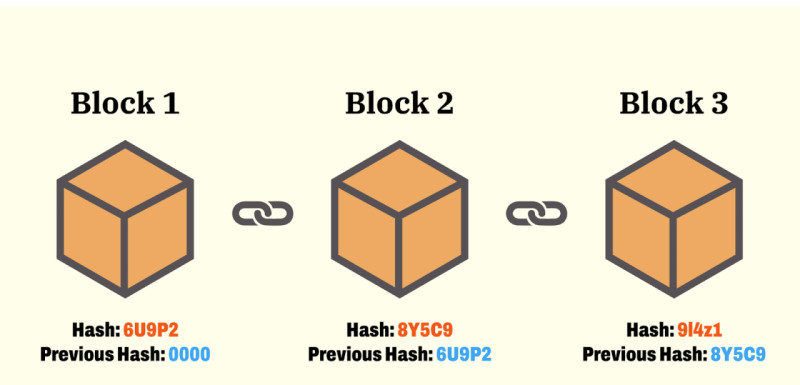
Each block contains encrypted data about transactions performed, as well as a link to the previous block. The data is encrypted using a hash, which is a special set of characters. Blockchain has several important characteristics:
- Immutability means that all data entered into the blockchain cannot be changed. Attempting to make changes in one block completely alters its hash, resulting in it no longer matching the next block. Therefore, such operations are rejected.
- Decentralization. Blockchain is not controlled by any organization or body, and the public ledger is not stored on a single server. Instead, information storage is carried out on a large number of devices owned by participants located around the world.
- Anonymity. Only information about wallet numbers is publicly available. It is impossible to obtain any personal data, including the name, surname, or address of the recipient or sender of the transaction.
How and by whom is data recorded in the blockchain? This function is performed by special employees, who are called differently in different chains: miners or validators. Miners work in networks with a PoW consensus algorithm, and validators – PoS. We'll talk more about them in the following chapters.
Who are miners?
We have already discovered that all data in the blockchain are stored in distributed ledgers, meaning not on a single device but across multiple ones. However, information cannot be added to several devices at once. To coordinate any changes made to the registry, there exists a consensus algorithm.
The first consensus mechanism that was invented is PoW, proof-of-work, which means "proof of performing work." In networks with this algorithm, confirming transactions and adding blocks to the chain require complex calculations. Miners perform this work, using specialized equipment.
Lately, mining has become increasingly difficult for one person, prompting miners to team up. Let's look in more detail at what a pool in cryptocurrency is. A pool is a community of miners who combine their computational power to solve tasks on blockchain.
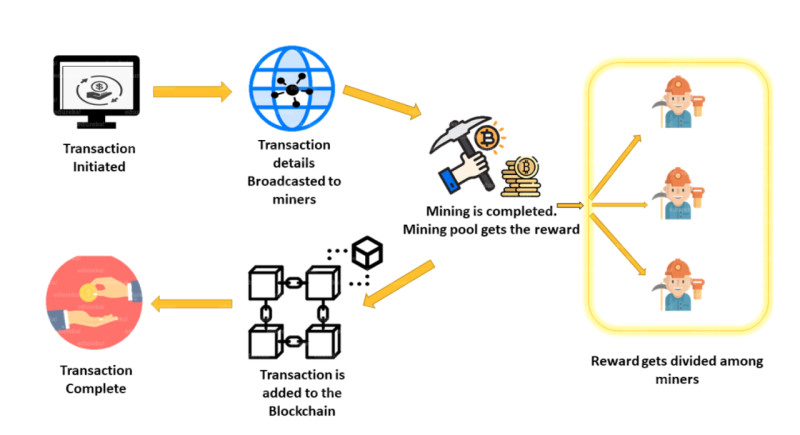
This does not mean physically combining equipment in one place, which would be called a mining farm. A pool is the creation of a virtual community, managed via a special server, where the members do not physically move anywhere.
An alternative to joining a miners' association is cloud mining, which allows for mining digital coins without any personal equipment. Companies owning their own data centers provide such equipment, and users can rent it for mining.
A key feature of chains with a PoW algorithm is that updating data in the blockchain must occur on all network devices to achieve consensus. For this reason, transactions are processed strictly in order. If there are too many, the chain's operation slows down, and fees increase.
Who are validators?
Despite the popularity of mining, it faces criticism for its high energy consumption. Many consider chains based on the PoW algorithm to be environmentally unfriendly. Moreover, they are more challenging to scale as the number of operations increases, and the processing speed slackens.
Therefore, more modern networks have adopted the PoS, proof-of-stake, which is deciphered as "proof of stake." To understand this issue, we need to find out who validators are and what staking in cryptocurrency entails.
Validators in PoS chains perform functions similar to those of miners in PoW chains: verifying transactions and adding blocks to the network. However, becoming a validator does not require buying specialized and costly equipment.
Validators are node holders, which support the functioning of a particular blockchain. A node is created through staking. For this, a user locks a certain amount of the chain's utility tokens in their account.
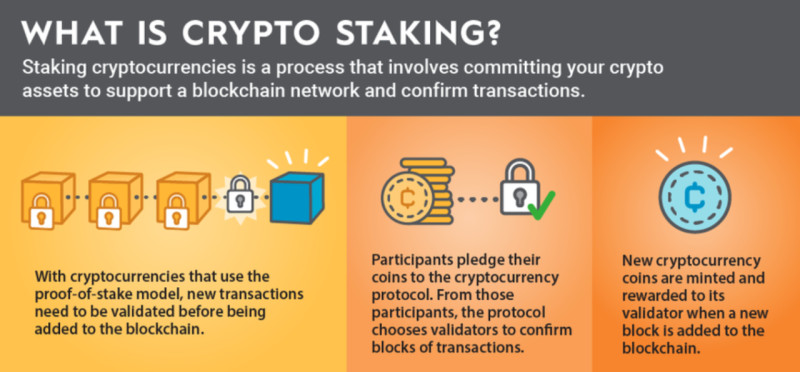
Each chain has its own requirements for how many coins need to be locked and for how long. Throughout this period, these coins cannot be used for other purposes, but interest is accrued for staking, with a higher percentage for longer lock periods.
Additionally, in many networks, holders of the project's native currency have the right to participate in governance. Typically, this right is exercised by voting on the most important issues concerning the development of the chain. Furthermore, the longer the lock period, the more weight the holder's vote has.
A distinctive feature of PoS-based networks is that once the number of nodes increases, the speed of transaction processing also increases. Therefore, such chains have high potential for scalability and often have significantly lower transaction fees, which we will discuss further.
What fees exist in blockchains
When conducting transactions in any network operating on blockchain technology, various fees are charged to the user. The amount of such fees varies from chain to chain and from platform to platform, so users can always choose a platform with minimal fees, which is especially relevant for making small payments and transfers.
In addressing transaction costs, we cannot overlook an important issue: what is gas in cryptocurrency? Let's delve into this matter now, as in the Ethereum chain, it is directly linked to the system of commission costs.
Gas refers to the computational efforts required to carry out a transaction in the chain. Simple transactions consume less gas, while complex ones consume more and, as a result, entail higher commission costs. For example, transferring Ether from one crypto wallet to another requires 21,000 units of gas.
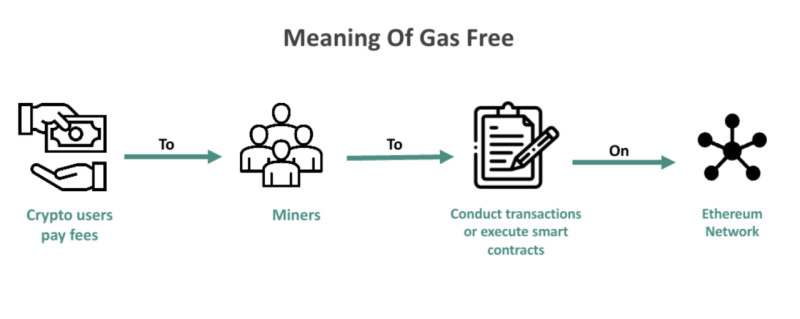
The term "gas" originated from the English word meaning "fuel." Indeed, gas in blockchain acts as the fuel necessary for conducting transactions. Additionally, in the Ethereum network, one can independently choose the speed of the operation and, accordingly, the size of the fee.
Gas does not have a fixed cost. For each transaction, the user sets the following two parameters:
- Limit is the maximum possible amount of gas that can be charged for a given operation;
- Price is the cost chosen by the initiator of the operation. The total cost of conducting an operation is calculated as the limit multiplied by the price.
The price of gas consists of two parts. The first part is the base fee, necessary for carrying out the operation, which is burned after the operation is completed. The second part is the priority fee, which is paid as a reward to validators and is used to speed up the operation.
The size of the fee depends on several factors: network congestion and the complexity of the operation itself. The relationship here is directly proportional: the higher the network load and the more complex the operation, the larger the transaction costs.
How to earn from crypto
While cryptocurrency has not become a universally accepted payment method in most countries worldwide, it is primarily used for speculation. There are several popular ways to earn from digital currencies, some of which we have already discussed above, such as mining and staking.
Two other common methods of generating income are trading and investing. In this and the next chapters, we will look more closely at trading, specifically at derivative financial instruments, explore what derivatives in cryptocurrency are, and discuss the incomes that can be obtained by this means.
Derivatives refer to any forward transactions where digital currency rates serve as the underlying asset. These transactions do not always involve the actual transfer of coins from one user to another but merely speculation on changes in asset values.
Several main types of derivatives are distinguished:
- Futures are forward contracts in which one party agrees to buy cryptocurrency from the other party at a specified time at a predetermined price. Futures are traded on exchanges, so there is a counterparty that guarantees the execution of the parties' obligations.
- Forwards are similar to futures but differ in that these transactions are not subject to strict standardization and are conducted without a central counterparty, which increases the risk of non-fulfillment of obligations by the parties.
- CFD contracts are contracts for price difference. The essence of such transactions lies in which direction the value of the asset will change: if it increases, the buyer profits, and if it decreases, the seller profits.
- A comparison of these derivative instruments is presented in the table below:
| Feature | Futures contract | Forward contract | CFD |
| Venue of making contract | Exchange floor | Outside exchange | Outside exchange |
| Content of contract | Standard | Agreed between parties | Differs with various brokers |
| Guarantees | Yes (exchange) | No | Yes (broker) |
| Purpose | Price speculation | Hedging risks | Speculation on price fluctuations |
| Physical transfer of asset | Can be transferred | Can be transferred | No |
| Risk | Low | High | High |
Other ways to earn
One popular type of crypto derivative is futures contracts on the price changes of digital currencies relative to each other. Let's discuss in this chapter what funding in cryptocurrency is and how one can earn from trading cryptocurrency.
Funding, or funding rate, refers to the payments received by traders who have open positions in termless futures. As the name implies, termless futures do not have an expiration date, so users can keep their positions open indefinitely.
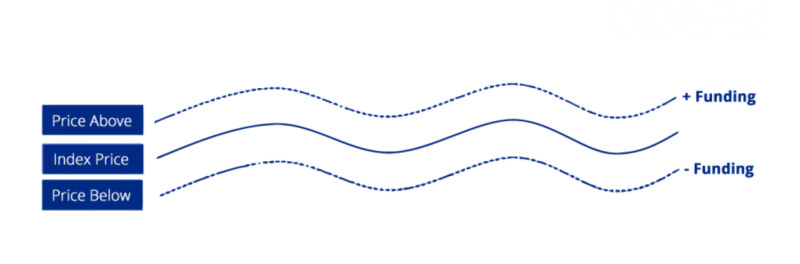
During such extended periods, the contract price can significantly deviate from the value of the underlying asset. To minimize these differences, the funding system was devised, allowing for the transfer of funds from some traders to others depending on their open positions.
If futures trading seems too complicated, there are other ways to earn from digital currencies. Thanks to high volatility, the price of cryptocurrencies can fluctuate significantly even within a very short time, yet trading allows earning both on the rise and fall of coin prices.
If a trader believes the value of a coin will rise, they open a long position. Conversely, if they think it will decrease, they open a short position. In this case, it is not necessary to buy or sell the currency itself. The trader essentially bets on whether its price will increase or decrease.
However, trading cryptocurrencies is not a game or guesswork. It involves precise calculations based on thorough preliminary analysis. Besides conducting analysis before making any trade, it is necessary to calculate not only the potential profit but also the possible risks, and make well-rounded decisions.
Investing in crypto
If speculative trading on the changes in digital currency rates seems too complicated or time-consuming, another popular way to earn from cryptocurrencies is through investing. Let's look more closely at what APR in cryptocurrency is and how it relates to the topic of investing.
APR stands for Annual Percentage Rate, which is the interest rate accrued on investments over a year. When an investor puts their funds into any asset, they want to know what benefit they will gain. APR and other indicators help assess the potential return on investments.
The APR rate can be applied to various types of investments, including staking, which we discussed earlier. Before locking in coins, an investor should find out the percentage they will receive. This percentage can vary throughout the year, but accruals are calculated based on the initial deposit amount.
For example, if an investor invests, say, 100 units of a digital currency at an annual rate of 5%, at the end of the year, an additional 5 coins will be accrued, after two years – 10 coins, and so forth. If the investment term is less than a year, the amount will be less.
There are other types of investments where the exact percentage of potential returns is not known in advance. This mainly refers to the method of capital investment known as holding, or 'hodling' in crypto slang. In this method, an investor purchases digital coins for the long term, anticipating their price growth.
The invested funds are effectively 'frozen,' and cannot be used for any other purposes, with investment periods ranging from several months to several years. The most crucial aspect of holding is selecting cryptocurrencies to invest in.
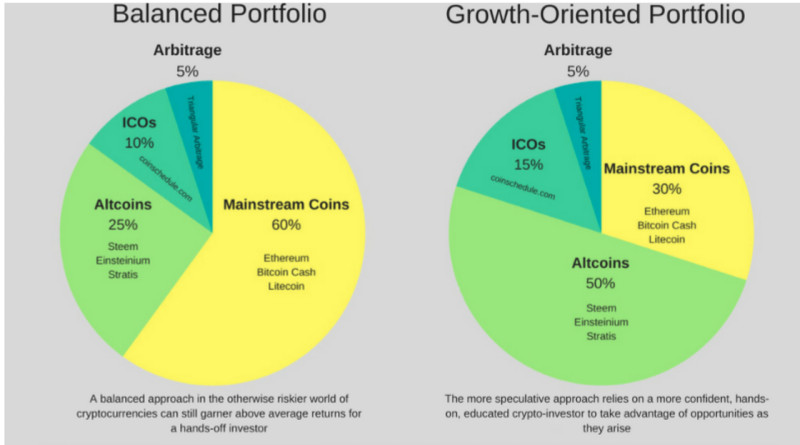
It's necessary to carefully choose digital currencies that have the potential for future value increase. However, the main rule for investors is "don't put all your eggs in one basket," meaning not to invest all capital in a single currency, no matter how promising it may seem.
Each investor should create an investment portfolio that includes assets with various ratios of returns and risks. For more conservative portfolios, no more than 5-10% of the entire portfolio should be allocated to crypto, for more aggressive portfolios – 30% or more, and besides, the portfolio can be composed entirely of digital currencies.
How to earn without investments
All the methods of earning from digital currencies mentioned above require not only time but also financial investments, meaning the user needs startup capital. But what if you don't have it? Let's explore how to earn from crypto without investments. As an example, let’s find out what a cryptocurrency airdrop is and some other methods.
An airdrop is essentially a free distribution of units of a particular digital currency for performing certain actions. Oftentimes, these are quite simple actions, such as registering on the project's website, following the project's social media accounts, or sharing posts.
Such distributions are primarily a marketing ploy to attract the attention of potential investors. Additionally, some projects distribute governance tokens this way and create a strong loyal community around the project. In other cases, such promotions are necessary for launching and starting the platform's operation.
Another way to earn without additional investments is by participating in affiliate programs. Such programs are available on many well-known cryptocurrency exchanges. The essence of participating in such a program is to invite other users to use the platform's services and receive a reward for their transactions.

To become a partner, you need to register in the program and receive a personal referral link, which you can post on your social networks or send to friends. For every user who starts trading on the platform using this link, the partner receives bonuses, such as a percentage of the trading commission.
Another interesting way to earn is through NFT games, which differ from classic video games in that they offer an opportunity to earn income. In some of these games, you can start playing without any initial investments, while others require a small initial capital to purchase characters.
The main essence of these games is that, in addition to completing various tasks and receiving rewards, the characters and other game attributes have material value. They are all represented as NFT tokens, which can be bought and sold not only within the game but also on other platforms.
Besides game characters, any works of art, including musical and artistic pieces, can also be represented as NFT tokens. Creating such tokens does not require initial investments, and they can later be sold on specialized platforms.
Types of cryptocurrencies
All digital currencies that have ever appeared or are being designed can be conditionally divided into several categories. This allows us to understand what is similar between coins and tokens and how they differ. So, all cryptocurrencies are divided into two main categories:
- Coins and
- Tokens.
The key difference between these two categories is that coins are issued on their own blockchain, whereas tokens are built on other existing blockchains. Examples of coins include Bitcoin, Polygon, Ether, Solana, and others. Examples of tokens include Shiba Inu, Dash, Pepe, and others.
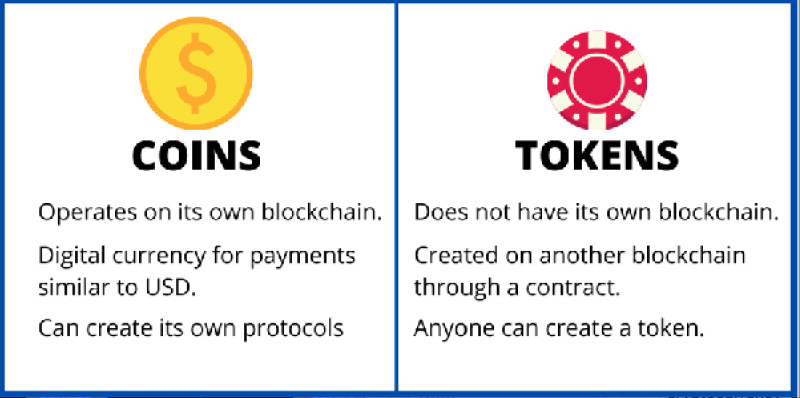
Creating a token is not very difficult. There are special programs and templates that allow you to create a token within literally one day. As for coins, their issuance requires more effort, as it is necessary to come up with not only the coin itself but also the architecture of a new blockchain.
However, regardless of the type of digital currency launched, each project needs a unique idea and funding to promote the platform and its currency. Funding can be raised privately or through an ICO, which is analogous to an IPO in the stock market, where coins can be bought even before they are released into free circulation.
There are other classifications of digital currencies. For example, all cryptocurrencies can be divided into Bitcoin and altcoins. Bitcoin is often placed in a separate category because it is the first digital coin. Altcoins are all coins that appeared after Bitcoin and are developed in a similar manner.
Another category of cryptocurrencies is stablecoins. Their key feature is that their value is tied to real money, which makes such currencies less susceptible to sharp fluctuations in value. A prominent example of such a currency is Tether (USDT), whose value is pegged to the US dollar.
How not to become victim of scammers
Cryptocurrencies attract the attention of not only traders or investors but also criminals who want to profit from fraudulent schemes. Since we're discussing the launch of new cryptocurrency projects, let's talk about what a scam in cryptocurrency is and how not to become a victim of scammers.
As mentioned, launching a new cryptocurrency project nowadays is not very difficult, especially if it is created on the basis of an existing blockchain. Therefore, new digital currencies appear almost daily and offer favorable conditions for investors, promising substantial profit.
However, it's important to understand that many of these projects may turn out to be scams, i.e., shady investment projects created to hit a jackpot. Often, such projects promise investors the opportunity to earn incredibly large profits in a short time and operate similarly to Ponzi schemes.
Sometimes the deception is unintentional, and the developers truly have no malicious intent. They simply may not thoroughly plan out the project details, and it turns out to be unsuccessful and simply closes shortly after its launch, as can happen with investment projects in any field, not just crypto.
But scams are usually defined as criminal schemes, where criminals attract funds to a non-existent project and then disappear with the money. The most well-known scheme used by scammers in the cryptocurrency world is called a "Rug Pull."
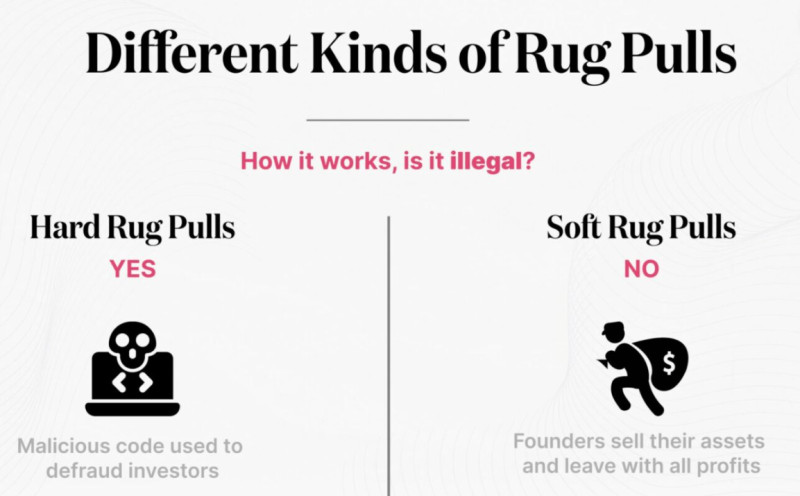
The essence of this scheme is that new coins are released, most of which remain in the possession of the "developers," while the rest are sold to investors. Subsequently, the value of these tokens is artificially increased, the scammers sell their coins and withdraw the funds, leaving investors with a worthless and devalued currency.
Frequent causes of fraud with digital currencies are because their legal status is still not defined in many countries, so people cannot report the theft of funds to law enforcement agencies. Therefore, until this issue is resolved, such crimes will continue to occur.
Therefore, users must protect themselves and their savings independently. It is recommended to use only trusted, reliable platforms to buy digital currency, use cryptocurrency wallets to store crypto, carefully check links to websites for phishing, and so on.
Conclusion
In this article, we addressed the most crucial issues related to the handling of digital currencies: the principles of blockchain operation, the circulation of new digital coins, the main methods of earning on cryptocurrency, types of cryptocurrencies, and others.
Despite the reliability of payments made with digital money, they have not yet become a universal means of payment like fiat money. Therefore, most users treat them as an asset to earn additional income through trading, investing, or other methods. Additionally, it's possible to earn by mining new coins, either through mining or staking.
One can earn on digital currencies even without any startup capital, simply by performing certain actions for which projects distribute coins. Another interesting direction for earning is NFT tokens, which can be created and sold on specialized platforms.
The heightened interest in cryptocurrencies attracts a large number of scammers to this field. Hence, it is crucial to carefully select projects and currencies for investment to avoid losing them irretrievably. Unfortunately, since the legal status of digital currencies is not specified in many countries, it becomes impossible to report the theft of crypto.


 Back to articles

